EU Exports Underpin 7.2m German Jobs
- A Prognos study commissioned by the vbw finds that exports to EU member states support around 7.2 million jobs and €550bn in gross value added in Germany, based on 2022 data.
- German exports to the United States fell 6.1 per cent in the first half of 2026 compared with the same period in 2025, with VW chief Oliver Blume explicitly blaming Trump
- Exports to France and the Netherlands grew 7.6 per cent and 9.0 per cent respectively in the same period, reinforcing the EU's role as Germany's most stable trading bloc.
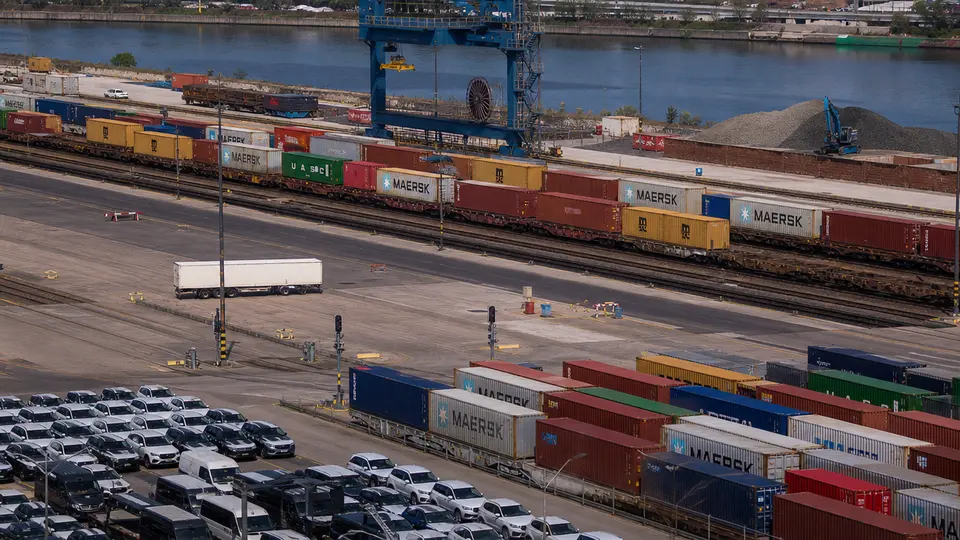
Exports to other European Union member states underpin approximately 7.2 million jobs in Germany and generate gross value added of around €550 billion, according to a study by the research consultancy Prognos, commissioned by the Vereinigung der Bayerischen Wirtschaft (vbw), the Bavarian business association. The figures relate to 2022, the most recent year for which the necessary data are available, though the study's authors note the importance of EU exports is likely to have grown rather than diminished since then.
EU outpaces other major trading blocs in strategic importance
The vbw's chief executive, Bertram Brossardt, argued that the EU remains Germany's most significant economic partner by some margin. "In international comparison, the EU is considerably more important for Germany than other major economic areas," he said. "It offers stable and reliable framework conditions, whose importance continues to grow in the face of rising geopolitical uncertainty." The study identifies the automotive sector, mechanical engineering, and chemicals as the industries most heavily dependent on EU demand, noting that these key sectors are also structurally embedded within European production networks.
Schengen zone adds further economic uplift
Beyond export demand, the study also examined the economic contribution of free movement within the Schengen area. Aggregating effects across freight transport, tourism, and cross-border commuters, researchers estimated a positive economic contribution of between €1.5 billion and €2 billion for Germany.
US tariffs weigh on German car exports as European trade grows
The study's findings arrive at a moment when the limits of reliance on non-EU markets are being felt acutely. Although the United States remained Germany's single largest trading partner in absolute terms during the first half of 2026 — with exports valued at €73.1 billion according to the Federal Statistical Office — that figure represents a 6.1 per cent decline compared with the same period in 2025. Volkswagen chief executive Oliver Blume recently cited tariffs imposed by the Trump administration as one explicit reason for the carmaker's difficult position. While the situation with China has presented its own structural challenges for German trade, the EU picture moved in the opposite direction: exports to France rose 7.6 per cent to €63.2 billion, and shipments to the Netherlands increased 9.0 per cent to €60.5 billion, making the two countries the most important European markets for German exporters. Brossardt called on policymakers to press ahead with completing the single market and dismantling remaining trade barriers, arguing that a economically strong Europe was a direct prerequisite for growth in Germany and Bavaria.