Trump Threatens 50% Tariffs on Canada as Trade War Deepens
- Trump threatened 50% tariffs on all Canadian vehicles, auto parts, and steel effective 1 January 2027, posting the announcement on his own social media platform after trade
- Canadian Prime Minister Mark Carney announced Canada will impose dollar-for-dollar retaliatory tariffs from 8 September, calling the breakdown of talks reluctant but necessary and
- Cross-party support has coalesced behind Carney in Canada, while some conservative voices in the US have warned of the economic damage a prolonged trade war with Canada would
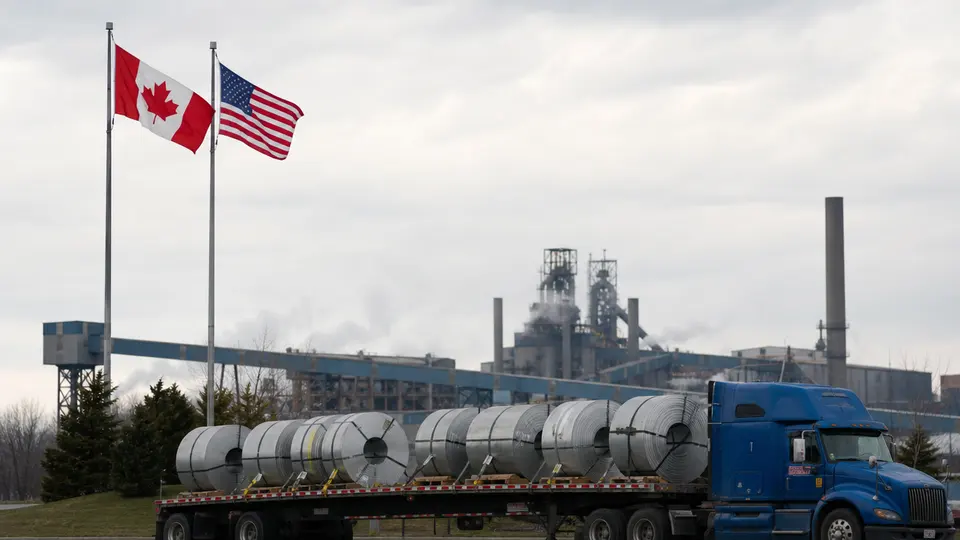
Donald Trump has threatened to impose a 50 per cent tariff on all Canadian automobile and steel imports from 1 January 2027, escalating a trade dispute that has already seen both nations exchange sweeping levies and brought bilateral relations to their lowest point in recent memory.
Trump's announcement and its immediate context
Posting on his social media platform, Trump declared that tariffs on "all automobiles, trucks, both large and small, auto parts and steel" from Canada would rise to 50 per cent at the start of 2027. He stated that vehicles manufactured in the United States would be exempt. "Canada has been ripping off the United States for years," he wrote, adding: "Canada will no longer be treated as a state." He further claimed that 95 per cent of Canada's business is conducted with the United States, arguing that Canada needs the US rather than the other way around.
The announcement follows the collapse of trade negotiations between the two countries. On the Saturday before Trump's post, new US tariffs of 50 per cent on hundreds of Canadian goods — covering an estimated $20 billion (US) of Canada's July exports, including hockey sticks and agricultural products — came into force. It is worth noting that Canadian steel imports were already subject to a 50 per cent tariff; automobiles and parts from outside the US currently attract a 25 per cent levy. Canada is the third-largest source of American imports, with more than $380 billion in Canadian goods entering the United States in 2025, according to US Census data.
Canada's response: dollar-for-dollar retaliation
Speaking in Ottawa, Prime Minister Mark Carney announced that Canada will match the US tariffs dollar-for-dollar from 8 September. Carney described breaking off negotiations as a reluctant decision, acknowledging it would raise costs for Canadians. "But, at the same time, we take this step convinced it is what is best for Canada. When you are attacked, you are at war, and we have been attacked," he said. He characterised the terms proposed by Washington as "uneconomic and unfair", stating: "We cannot accept what we have been offered and we will not give what we have been asked."
Carney's position drew unusually broad political support across Canada's political spectrum. Pierre Poilievre, leader of the opposition Conservative Party, backed the government's stance, warning that unilateral tariffs risked deindustrialising Canada and calling on Canadians to "remain united to defend our country against these unjust attacks on our jobs and our businesses." Ontario Premier Doug Ford adopted an equally combative posture, declaring that Canada should deploy every available tool to ensure that any pain Trump sought to inflict on Canadians was reciprocated in equal measure.
Dissenting voices in the United States
Trump's position has not gone unchallenged within his own political constituency. Several conservative voices in the US have warned of the negative consequences of pursuing a trade war with Canada, though those concerns appear to have had little discernible effect on policy. Economists and consumer advocates have noted that the tariffs are likely to increase costs for American consumers, given the deep integration of the two countries' supply chains — particularly in the automotive sector.
An unresolved and volatile dispute
Whether Trump's latest threat will be carried through, modified, or withdrawn remains an open question. The announcement comes amid acknowledged uncertainty about the US administration's negotiating posture, which has shifted repeatedly throughout the dispute. Previous rounds of tariff escalation have been followed by partial reversals or renegotiations, though no such sign of retreat was evident in Trump's most recent statement.
With Canada formally committed to matching US measures and Ottawa increasingly unwilling to accept Washington's terms, the trajectory of the dispute points towards a prolonged and economically costly stand-off — one with significant consequences for industries and consumers on both sides of the border.