Chess Thrives in an Age of Shrinking Attention
- FIDE now has 203 member federations and Chess.com reports over 250 million user accounts, with tens of millions playing monthly across all major platforms.
- Spain leads internationally in chess education and therapy, following a unanimous 2015 parliamentary resolution, and hosts more international tournaments each year than any other
- Scientific research indicates chess can develop cognitive and emotional intelligence and may help delay the onset of Alzheimer's disease, bolstering its use as an educational and
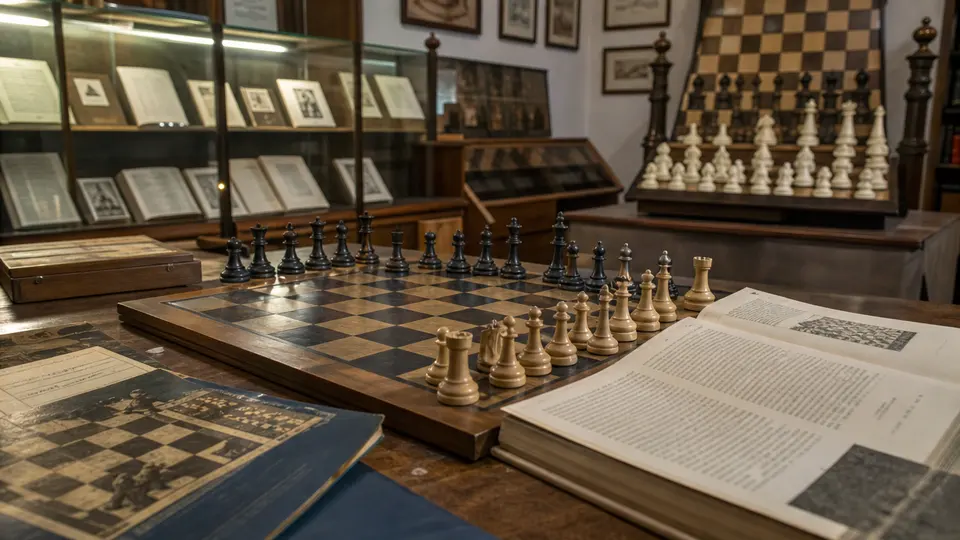
At a moment when there are strong indications that sustained concentration is in retreat — when a 30-second video is, for many, already too long — chess is attracting more players than at any point in its 15-century documented history. The paradox is striking, and the evidence for it is substantial.
A game with global reach
The International Chess Federation (FIDE) counts 203 member federations, a figure surpassed only by the governing bodies of football, athletics and basketball. Chess.com alone reports more than 250 million user accounts. When other major platforms such as Lichess and Play Chess are included, tens of millions of people play at least once a month. Over-the-board tournament participation is also growing.
The pandemic accelerated this expansion considerably, as did the global success of the Netflix series The Queen's Gambit. Netflix has since added two further chess-themed productions: Queen of Chess, which follows Judit Polgár — the only woman ever to have ranked among the world's top ten players — and Chess Mates, which concerns the unproven cheating allegations made by Magnus Carlsen against Hans Niemann.
Celebrity endorsement and cultural breadth
The game's current devotees span an unusually wide range of fields. Spanish Prime Minister Pedro Sánchez, tennis player Carlos Alcaraz and footballers Erling Haaland and Unai Simón are among its more prominent enthusiasts. In sport, managers Pep Guardiola and Ernesto Valverde have drawn on it professionally. In the arts, its admirers have included Humphrey Bogart, Stanley Kubrick, Miloš Forman and the novelist Arturo Pérez-Reverte.
The appeal, as observers at a simultaneous exhibition in Madrid noted, is difficult to define precisely. "There's something hypnotic about it," one spectator remarked. "It's like a magnet." Spanish-Iranian woman grandmaster Sara Khadem played 20 opponents simultaneously at the event; despite no amplified commentary, the audience remained for more than two hours.
History, politics and prohibition
Chess traces its documented origins to sixth-century India, passing through Persia and the court of Baghdad before Arab scholars brought it to al-Andalus in the eighth century, from where it spread rapidly across the Iberian Peninsula. King Alfonso X of Castile recorded in his Book of Chess, Dice and Tables (1283) that the game was played by Muslims, Jews and Christians — men, women and children alike. Around 1475, probably in Valencia, the queen acquired her modern status as the board's most powerful piece. Spain subsequently exported that version of the game to the Americas and much of Europe, and the cleric Ruy López, sponsored by Philip II, came to be recognised as the game's first unofficial world champion in the mid-16th century.
The game's history is not without political turbulence. It was banned by the Spanish Inquisition, by the Chinese government during the final years of Mao Zedong's rule, by Ayatollah Khomeini in Iran and, currently, by the Taliban in Afghanistan. Its intersection with geopolitics continues: former world champion Garry Kasparov, now living in exile in New York, ranks high among Vladimir Putin's declared enemies, while his long-standing rival Anatoly Karpov — a lawmaker for Putin's party — was found unconscious on a dark street shortly after publicly opposing the invasion of Ukraine.
Artificial intelligence and the cognitive case
Chess has also been central to the development of artificial intelligence. Alan Turing's pioneering work in 1947 and Demis Hassabis's Nobel Prize in Chemistry in 2024 both have roots in the game's computational challenges. The rapid acceleration of AI capabilities in recent years traces a direct lineage to chess-based research. Today, the strongest chess-playing entity is not human: modern engines calculate millions of moves per second and can run on a mobile telephone. Yet competitive chess has not been diminished by this. Beauty in the game often arises from imperfection — one player errs, the other responds brilliantly — and that dynamic remains entirely beyond the machine's authorship.
There is also a growing body of scientific evidence that chess develops both cognitive and emotional intelligence and may help slow age-related cognitive decline, with research suggesting it could potentially delay the onset of Alzheimer's disease. Spain has been at the forefront of integrating this evidence into policy. A unanimous resolution passed by the Spanish Congress on 11 February 2015 sought to introduce chess as an educational tool in schools. The region of Extremadura leads in its therapeutic applications, running chess programmes for cognitive ageing, prison rehabilitation, addiction recovery, and conditions including ADHD, autism spectrum disorder and Down syndrome.
A corrective to intellectual passivity
The game's resurgence sits in deliberate contrast to what many observers describe as a culture of intellectual passivity — one in which, as is increasingly noted, individuals use tools such as ChatGPT simply to generate text on demand, bypassing original thought altogether. Globally, roughly one female player exists for every ten male players, and chess remains one of the fields most strongly associated with child prodigies, alongside music and mathematics. The number of possible chess games — a figure represented as the number 1 followed by 123 zeros — exceeds the estimated number of atoms in the known universe. That inexhaustibility may be, as much as anything, the reason the game endures.
More in Culture & Arts
→ Culture & Arts
Why Penthouses Became Status Symbols
Culture & Arts
Why Penthouses Became Status Symbols
 Culture & Arts
Belgian Pie-Thrower Godin Dies at 80
Culture & Arts
Belgian Pie-Thrower Godin Dies at 80
 Culture & Arts
Shetland's Spanish Armada Legend
Culture & Arts
Shetland's Spanish Armada Legend
 Culture & Arts
Turner Prize Winner's Sound Evidence
Culture & Arts
Freddie Mercury Costumes on Show at V&A
Culture & Arts
Kit Harington Joins Harry Potter Series
Culture & Arts
Turner Prize Winner's Sound Evidence
Culture & Arts
Freddie Mercury Costumes on Show at V&A
Culture & Arts
Kit Harington Joins Harry Potter Series