Turner Prize Winner's Sound Evidence
- Lawrence Abu Hamdan, Turner Prize co-winner in 2019, directs Earshot, an NGO founded in 2023 that investigates human rights abuses using acoustic forensics.
- Earshot has analysed bullet trajectories in Gaza and assembled evidence suggesting a sonic weapon was likely used against a silent vigil in Belgrade, though the latter remains
- Abu Hamdan's methodology originated in 2016 work with Forensic Architecture for Amnesty International, drawing on survivor testimonies from Syria's Sednaya prison where sound was
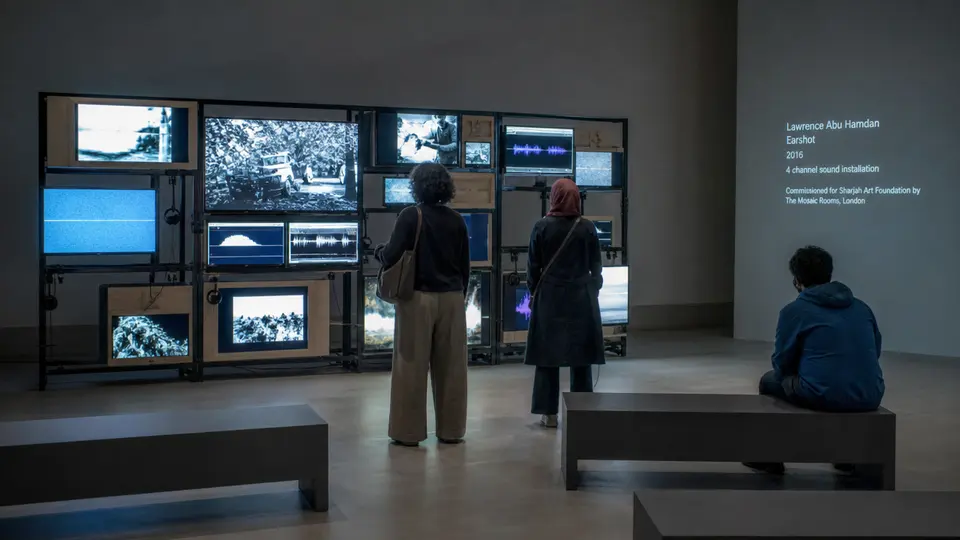
Lawrence Abu Hamdan occupies a rare dual role: celebrated contemporary artist and director of a young human rights NGO that deploys acoustic forensics to investigate alleged atrocities. The Lebanese-British artist jointly won the Turner Prize in 2019 and currently has work on show at the Venice Biennale. Yet it is his parallel life as the head of Earshot — an investigative organisation he founded in 2023 — that has come to define his public purpose.
Turning sound into evidence
Earshot, which describes itself as investigating human rights abuses through sound evidence, has taken on cases of acute sensitivity. According to Abu Hamdan, his team has analysed the direction and position of bullets that Israeli soldiers fired at emergency workers in Gaza. The organisation has also assembled evidence suggesting that a sonic weapon was likely deployed to disperse a mass silent vigil in Belgrade — a claim that remains unconfirmed by the authorities involved. The precision of that language matters: Earshot's methodology yields probabilistic findings, not courtroom verdicts, and Abu Hamdan is careful to frame uncertain conclusions as such.
Roots in Sednaya
The intellectual foundation for this work was laid a decade ago. In 2016, Abu Hamdan worked alongside the London-based research agency Forensic Architecture on a project for Amnesty International centred on Syria's Sednaya prison. Survivors of that facility — described in the source material as operating under conditions of almost complete darkness and enforced silence, where prisoners risked death for making any noise — provided testimony grounded not in sight but in sound. Their acute sonic memories of screams, keys, and distant voices became the raw material for reconstruction. It was listening, paradoxically, that both endangered the inmates and sustained their capacity to resist.
Art and accountability intertwined
Abu Hamdan insists the two halves of his identity are inseparable. His investigative work informs his artistic practice, and his artistic sensibility shapes how Earshot frames and communicates evidence. The Venice Biennale has become a notable platform this year for work engaging directly with the conflict in Gaza, and Abu Hamdan's presence there alongside his NGO activities reflects a broader convergence of contemporary art and documentary accountability. Whether acoustic forensics can ultimately influence legal proceedings or policy remains an open question, but the discipline Abu Hamdan has helped pioneer is gaining institutional weight — and its findings are being watched.
More in Culture & Arts
→ Culture & Arts
Why Penthouses Became Status Symbols
Culture & Arts
Why Penthouses Became Status Symbols
 Culture & Arts
Belgian Pie-Thrower Godin Dies at 80
Culture & Arts
Belgian Pie-Thrower Godin Dies at 80
 Culture & Arts
Shetland's Spanish Armada Legend
Culture & Arts
Freddie Mercury Costumes on Show at V&A
Culture & Arts
Kit Harington Joins Harry Potter Series
Culture & Arts
Shetland's Spanish Armada Legend
Culture & Arts
Freddie Mercury Costumes on Show at V&A
Culture & Arts
Kit Harington Joins Harry Potter Series
 Culture & Arts
French Broadcaster Bouvard Dies at 96
Culture & Arts
French Broadcaster Bouvard Dies at 96