Why Penthouses Became Status Symbols
- Almodóvar's 1988 film Women on the Verge of a Nervous Breakdown frames the penthouse as an elevated refuge from an adversarial world, establishing one of its most enduring
- A luxury penthouse in Madrid's Chamberí district, purchased by the Comunidad de Madrid, has been put up for sale amid unresolved suspicions and unanswered questions.
- Cultural analysts suggest that those at the centre of the Madrid penthouse controversy are, regardless of other qualities, devotees of the aspirational aura that top-floor
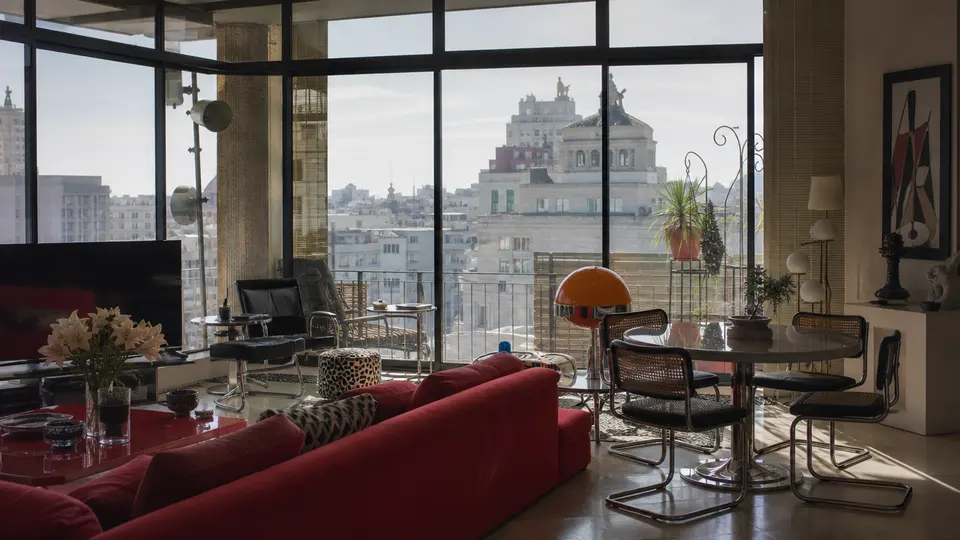
Few residential spaces have accumulated as much cultural weight as the penthouse. Elevated above the city, set apart from the street, it functions in the popular imagination as refuge, reward, and declaration of arrival — a symbol of aspiration that architecture alone cannot fully explain.
Almodóvar's penthouse as sanctuary
The cultural coding of the penthouse finds one of its most precise articulations in Pedro Almodóvar's 1988 film Women on the Verge of a Nervous Breakdown. In the opening voiceover, the character Pepa Marcos — played by Carmen Maura — recalls moving to her penthouse with Iván as the world collapsed around her: a retreat above the chaos below, a space of intimacy and, she hoped, salvation. Almodóvar's script wove together vaudeville comedy, slapstick, and romantic melodrama, but the penthouse itself carried its own quiet symbolism: a place one escapes to, not merely a place one lives in. In the same film, a property agent played by Agustín Almodóvar assures Pepa, on learning she intends to let the flat, that he will secure her an excellent return — a line that resonates with uncomfortable clarity today.
From fiction to political controversy
The aspirational mythology of the penthouse has collided with rather more prosaic realities in Madrid, where a luxury top-floor flat in the Chamberí district, acquired by the regional government of the Comunidad de Madrid, was subsequently put up for sale amid unresolved suspicions and questions that have yet to receive satisfactory answers. The political row surrounding the property has generated narrative twists that, as one commentator observed, even an Almodóvar screenplay might struggle to concentrate — and, it was noted, it remains too early to conclude that further developments will not follow. The controversy has drawn in the ruling Partido Popular, adding a party-political dimension to what began as a question about public expenditure on luxury real estate.
The aspirational aura
What those responsible for the Madrid penthouse affair may or may not share with Pepa Marcos, the analysis suggests, is a devotion to the aspirational aura that top-floor properties project in contemporary culture. The penthouse, simultaneously private retreat and public statement, continues to function as a potent shorthand for status — one that, as the current controversy illustrates, retains its power to fascinate, and to provoke, long after the keys have changed hands.
More in Culture & Arts
→ Culture & Arts
Belgian Pie-Thrower Godin Dies at 80
Culture & Arts
Belgian Pie-Thrower Godin Dies at 80
 Culture & Arts
Shetland's Spanish Armada Legend
Culture & Arts
Shetland's Spanish Armada Legend
 Culture & Arts
Turner Prize Winner's Sound Evidence
Culture & Arts
Freddie Mercury Costumes on Show at V&A
Culture & Arts
Kit Harington Joins Harry Potter Series
Culture & Arts
Turner Prize Winner's Sound Evidence
Culture & Arts
Freddie Mercury Costumes on Show at V&A
Culture & Arts
Kit Harington Joins Harry Potter Series
 Culture & Arts
French Broadcaster Bouvard Dies at 96
Culture & Arts
French Broadcaster Bouvard Dies at 96