Spain's State Fails the Ceuta Test
- Spain's central government has been condemned for a reactive and poorly coordinated response to the Ceuta border crisis, despite bearing primary responsibility for managing it
- Critics draw direct parallels with the Valencia DANA disaster of two years ago, when both the regional government and Pedro Sánchez's administration failed to coordinate
- Political commentators warn that repeated state failures, compounded by partisan rivalry, risk providing Vox with an electoral platform by demonstrating that democratic
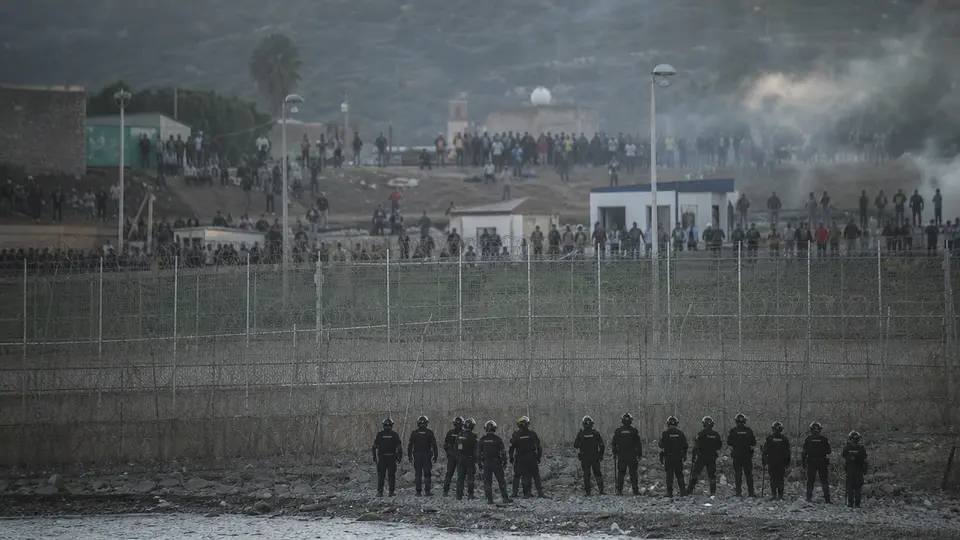
Spain's central government has drawn sustained criticism for its handling of the Ceuta border crisis, with political commentators warning that repeated failures of institutional coordination are eroding public confidence in democratic governance and laying the ground for a populist electoral backlash.
A State Caught Behind Events
The prevailing view, advanced in political analysis, is that the government consistently found itself one step behind developments in Ceuta, where the concentration of thousands of migrants in deeply inadequate conditions gave rise to serious sanitary and security concerns. The central government is held to bear principal responsibility for leading a crisis of this magnitude — particularly given that Ceuta's own resources were demonstrably insufficient — yet the response has been condemned as reactive rather than preventive. Critics argue the state failed above all to anticipate the human and humanitarian consequences that followed the mass border crossing. The precise role of Morocco, the intelligence services, and the Interior Ministry on the day thousands of migrants scaled the frontier fence remains contested and is expected to be addressed by ministers before Congress.
The Shadow of Valencia
The Ceuta crisis has revived uncomfortable comparisons with the Valencia DANA flooding disaster of roughly two years ago, in which both the Generalitat Valenciana and the central government stand accused of failing to mobilise a swift and adequate humanitarian response. Hundreds of thousands of Valencians were said to have felt entirely abandoned for four days. What followed was arguably worse: both administrations proceeded independently, with no meaningful mechanism or apparent will for institutional collaboration. That conduct has been described as emblematic of a broader dysfunction within Spain's composite state model — the constitutional architecture designed to coordinate responses to precisely such emergencies. The failure, critics contend, is not one of legal frameworks but of political will, with partisan rivalry systematically overriding the institutional machinery intended to protect citizens. The management failures behind Spain's Ceuta response have drawn sustained scrutiny from across the political spectrum.
The Populist Dividend
Senior voices have called on both the PSOE and the PP, along with other parliamentary forces, to reflect seriously on how institutional paralysis and partisan conflict — when they are permitted to override emergency response mechanisms — risk conferring electoral advantage on those who stand to benefit most from democratic failure. Vox has been identified as the principal beneficiary should the state continue to be perceived as incapable of responding to its citizens in a crisis. The fault lines exposed within Spain's left have compounded that vulnerability further.
The warning is unambiguous: the conditions for a populist surge are not being engineered by opponents of the constitutional order — they are being created by the failures of those nominally responsible for upholding it. With ministers yet to face congressional questioning over the intelligence and operational breakdowns surrounding the initial mass crossing, the political reckoning appears far from concluded.