Siegmund: AfD's Face in East Germany
- Ulrich Siegmund, the AfD's 35-year-old candidate in Saxony-Anhalt, is polling at up to 43 per cent ahead of the 6 September regional election, according to the Pollytix institute.
- Siegmund attended a November 2023 meeting in Potsdam alongside neo-Nazis and extremists at which a plan to forcibly remove people of foreign origin — including German citizens —
- Der Spiegel reported that several of his associates belonged to a banned neo-Nazi youth group; the AfD has since repurposed the magazine's 'Germany's Most Dangerous Man' cover as
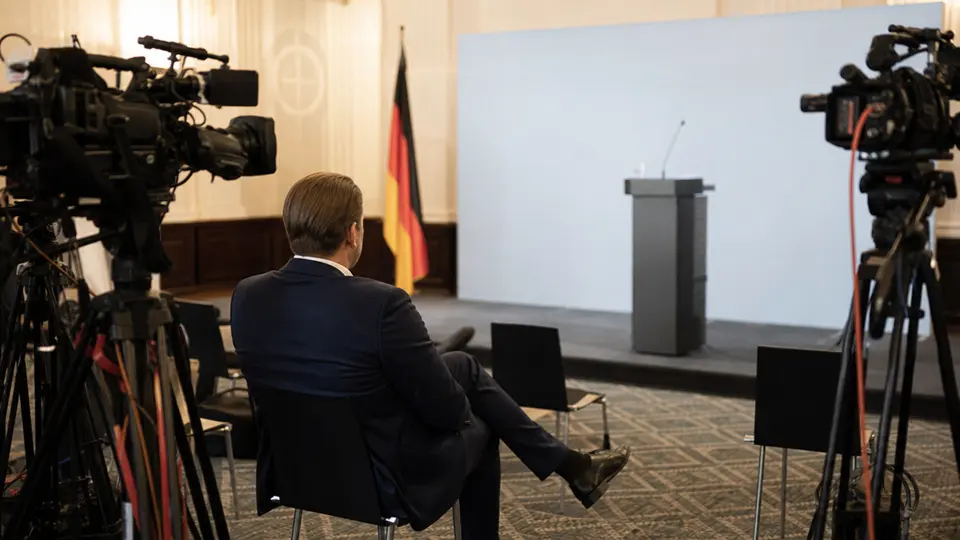
Ulrich Siegmund, the Alternative für Deutschland candidate in Saxony-Anhalt's regional election on 6 September, has emerged as potentially the most consequential figure in the German far right's decade-long push for executive power — and one of its most contested.
The poll surge
The 35-year-old former commercial technician and regional MP since 2016 is polling at up to 43 per cent of the vote, according to the Pollytix institute — a figure that would fall just short of an outright majority but could still prove decisive. Siegmund has calculated that if several smaller parties fail to clear the five per cent parliamentary threshold, the resulting distribution of seats might hand the AfD effective control of the Magdeburg legislature even without a coalition partner. Siegmund has led Saxony-Anhalt polls consistently in the weeks before the vote. The state has a population of around 2.1 million.
A proximity campaign built on social media
Rather than staging large rallies, Siegmund conducts a campaign of small, carefully managed encounters — smiling, affable and flanked by bodyguards, signing autographs and posing for photographs with supporters at venues such as a party marquee in a peripheral retail area of Magdeburg. He has amassed roughly half a million Instagram followers and 750,000 on TikTok. Supporters at the marquee expressed enthusiasm for tighter immigration controls, with two women interviewed describing their intention to vote AfD "for peace, for freedom, and for our people."
Controversial record and the Potsdam meeting
Siegmund's public profile sits uneasily alongside a documented past. In November 2023 he attended a gathering in Potsdam that included neo-Nazis and extremists, at which Austrian identitarian Martin Sellner outlined a so-called "remigration" plan — a term used to describe forcing people of foreign origin, including those holding German citizenship, to leave the country. In public, Siegmund now says he supports deportation of "only illegals and criminals," alongside drastic cuts to migrants' rights and a rejection of Islam. He has also called for school curricula that reinforce a nationalist reading of German history and for expanded Russian-language teaching — a stance observers have linked to residual pro-Russian sentiment in parts of the former East Germany, of which Saxony-Anhalt was a constituent part.
Der Spiegel reported that several of Siegmund's associates were formerly members of Heimattreue Deutsche Jugend, a neo-Nazi youth group banned in 2009, and ran a cover story under the headline "Germany's Most Dangerous Man" alongside a photograph of Siegmund. The AfD has since turned that headline into campaign material, printing it on T-shirts; Siegmund has been photographed holding copies of the cover with visible satisfaction.
Before joining the AfD, Siegmund was briefly a member of the centre-right CDU, the party of Chancellor Friedrich Merz. The question of how to characterise AfD voters in eastern Germany remains sharply debated.
The eastern identity card
Born in Havelberg in 1990 — one year after the fall of the Berlin Wall — Siegmund has nonetheless made the grievances and pride of the former East a central motif of his candidacy, riding a Simson Schwalbe KR 51/1, an iconic motorcycle of the defunct communist German Democratic Republic, at historic bike gatherings. He has also set out plans to cut NGO funding and restructure public broadcasting should he reach office.
The AfD has been governed out of power in every German state by a cross-party cordon sanitaire — the Brandmauer — since its foundation in 2013. Whether Saxony-Anhalt's arithmetic on polling day is sufficient to break that barrier remains unresolved, but Siegmund's campaign has demonstrated that the party's route to regional government now hinges as much on electoral mathematics as on raw vote share.
More in Politics
→

Read in another language