PP Demands All Ceuta Migrants Returned
- The PP insists every migrant in Ceuta must be returned to Morocco, with no exceptions for minors, adolescents, or those with illnesses.
- Spokesman Borja Sémper declared that Morocco's social welfare shortcomings are Rabat's responsibility, not Spain's, ruling out any mainland transfers.
- The PP is preparing a parliamentary offensive targeting eight ministers and Prime Minister Sánchez, whom it accuses of evading responsibility during the crisis.
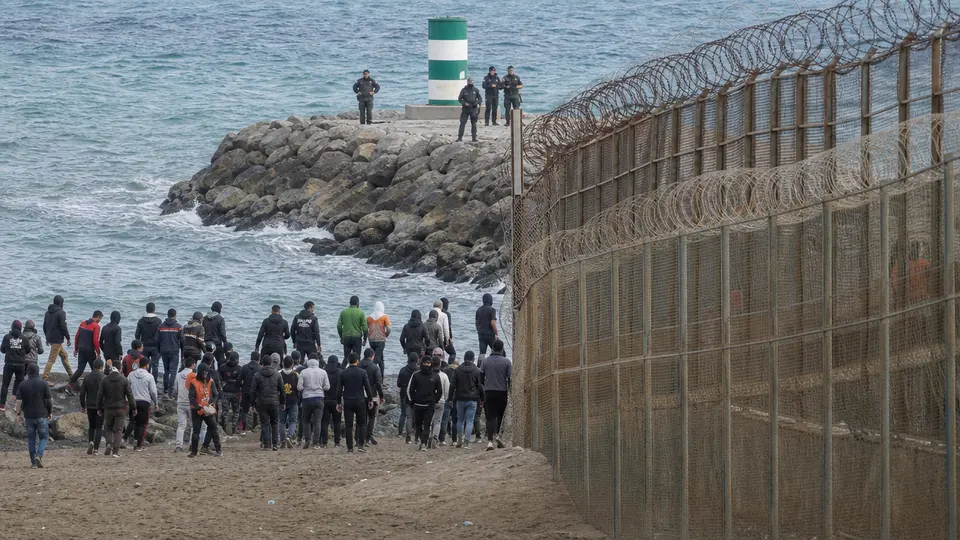
Spain's main opposition party has hardened its stance on the thousands of migrants who entered Ceuta irregularly in late July, insisting that every individual — regardless of age, gender, or medical condition — must be returned and that none should be transferred to the mainland. The position, confirmed by national spokesman Borja Sémper following a Steering Committee meeting chaired by Alberto Núñez Feijóo at the party's Génova headquarters, leaves no room for exceptions based on vulnerability.
No transfers, no exceptions
"We are talking about returns, not redistribution," Sémper said, explicitly ruling out any formula that would involve relocating migrants currently in Ceuta to other parts of Spain. The declaration came as the Ministry of Youth and Childhood was reportedly organising the transfer of approximately 500 vulnerable minors from the autonomous city to the mainland — a process the PP has declined to engage with, refusing to enter any discussion about inter-regional solidarity, even though the majority of Spain's autonomous communities are governed by the PP itself.
The party's position extends to those diagnosed with infectious diseases. PP has called on the government to study the possibility of isolating or confining individuals found to have contagious illnesses, where doing so is deemed "medically reasonable". Among the conditions identified in Ceuta are tuberculosis, scabies, chickenpox, and gastroenteritis. Specialists, however, have advised against isolation in the cases detected there.
Morocco told to meet its own social obligations
Feijóo's party also directed pointed criticism at Rabat, arguing that deficiencies in Morocco's social welfare system are a matter for the Moroccan government, not Spain's public services. "Morocco's social policy must be made by the government of Morocco," Sémper declared, framing the issue in terms that go beyond the mechanics of border returns. The broader question of how Spain balances diplomatic relations with Morocco against domestic migration pressures remains unresolved. How Rabat will respond to a major Spanish opposition party publicly challenging its welfare responsibilities towards its own citizens remains to be seen.
To accelerate the processing of return cases, PP has urged the government to deploy an extraordinary reinforcement of immigration services in the area, operating around the clock across morning, afternoon, and night shifts, with the stated aim of reducing the number of pending cases to zero.
Parliamentary offensive planned for autumn
Sémper confirmed that the PP intends to bring the Ceuta crisis before Congress when the parliamentary term resumes, demanding that eight ministers appear to account for their handling of the situation. Above all of them, Génova placed Prime Minister Pedro Sánchez, whom the party accused of using his ministers as a "human shield" while he "hid" in Lanzarote. In the PP's assessment, Sánchez must bear "the maximum political responsibility" for the government's response. Whether that framing will find traction in a parliament where the government retains sufficient support to govern remains an open question as the crisis enters its second month.