Post Offices Used to Launder Dirty Cash
- Jigar Gheewala, a declared bankrupt on benefits, deposited more than £880,000 in cash across 200 transactions at Leicester post office branches during 2020 and was subsequently
- Investigators allege that hundreds of millions of pounds in criminal proceeds are laundered through UK post offices every year, exploiting their cash-handling role on the high
- A key unresolved question is why police forces have shown apparent reluctance to investigate the full scale of post office money laundering; no official explanation or denial has
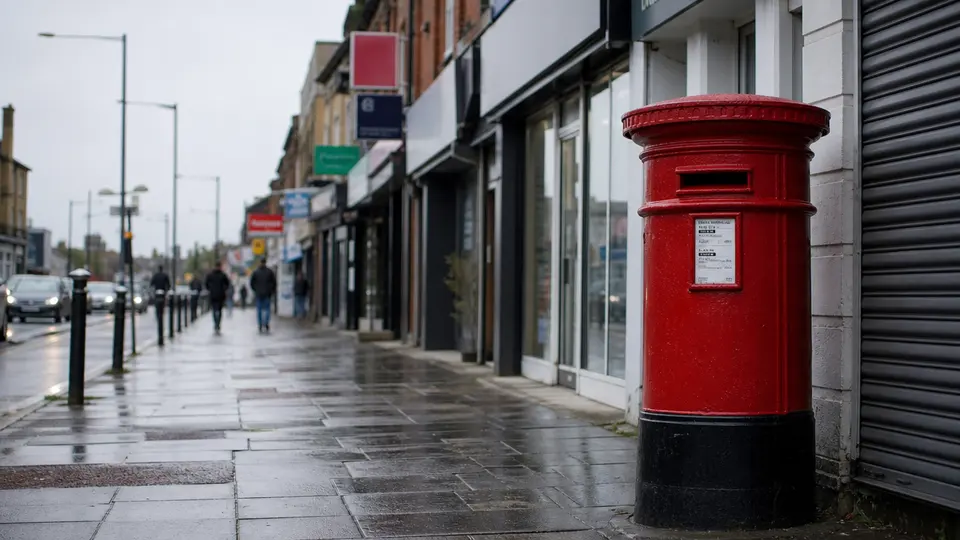
Hundreds of millions of pounds in dirty money may be flowing through British post office branches every year, according to an investigation that centres on a seemingly unremarkable bankrupt man in Leicester who deposited nearly £900,000 in cash at local post offices over the course of a single year.
The Leicester case
Jigar Gheewala was unemployed and on benefits, yet lived in a £1.3m home and paid for private schooling for his three children. It was this visible contradiction — an undischarged bankrupt whose bank account was, in the words of Leicestershire police financial crime supervisor Laura Panter, "absolutely not reflective of what it should be" — that first drew investigators' attention.
During 2020, Gheewala's account received more than £880,000 in cash spread across 200 separate deposits. Those deposits were not made through offshore shell companies or foreign jurisdictions typically associated with high-end money laundering. They were made, wad by wad, at post office branches across Leicester. Gheewala was subsequently found to be a money launderer.
A broader problem left unresolved
The Leicester case is presented as symptomatic of a much larger and largely unaddressed pattern. The allegation is that hundreds of millions of pounds in criminal proceeds are being laundered through post offices across the United Kingdom each year, exploiting the accessibility and cash-handling infrastructure of the high street network.
A central and unresolved question in the investigation concerns why police forces appear reluctant to probe the full scale of the problem. No explanation for that alleged reluctance is confirmed in the available material, and no official denial or formal response from policing bodies or Post Office Ltd has been provided in the sourced account.
The Gheewala case illustrates how sophisticated financial crime need not involve complex offshore arrangements. The post office counter — a fixture of British civic life — may, investigators suggest, be functioning as an unwitting conduit for organised crime's cash, with the true scale of the exposure still unquantified.
More in Crime & Justice
→ Crime & Justice
Eleven Cases Cloud Spain's Autumn
Crime & Justice
Eleven Cases Cloud Spain's Autumn
 Crime & Justice
Copacabana Lynching Shocks Brazil
Crime & Justice
Lockerbie Trial Postponed Again
Crime & Justice
Copacabana Lynching Shocks Brazil
Crime & Justice
Lockerbie Trial Postponed Again
 Crime & Justice
Third Leipzig Drone Carried Hexogen
Crime & Justice
Third Leipzig Drone Carried Hexogen
 Crime & Justice
Family Stranded 26 Days in Ceuta Estate
Crime & Justice
Barcelona Arson Suspect Arrested
Crime & Justice
Family Stranded 26 Days in Ceuta Estate
Crime & Justice
Barcelona Arson Suspect Arrested