Eleven Cases Cloud Spain's Autumn
- Former Spanish prime minister Zapatero faces investigation over an alleged €53m government rescue of airline Plus Ultra, with a judge placing him at the head of a suspected
- Around 30 individuals, including former PSOE officials and the Guardia Civil's director general, are under investigation in the so-called 'plumbers' case, which probes an alleged
- Spain's Constitutional Court is expected to rule this autumn on whether Carles Puigdemont must be amnestied for alleged embezzlement, a decision that could allow the former
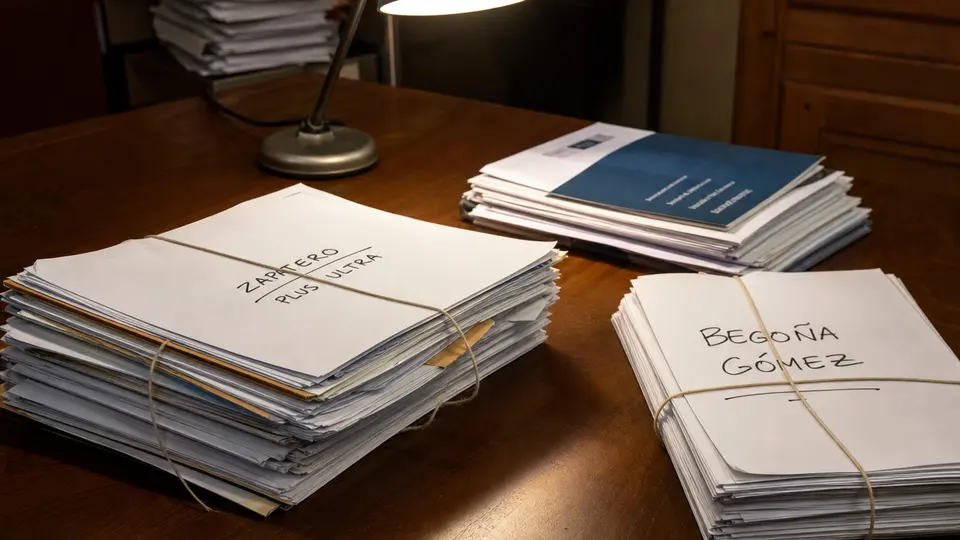
Spain's courts have been granted a brief respite by the summer heat, but as autumn approaches, eleven significant judicial proceedings are set to resume — collectively implicating a former prime minister, a sitting president's wife, regional leaders, and senior figures from both major parties.
The Plus Ultra Case: Zapatero at the Centre
The case attracting the most public attention concerns the rescue of airline Plus Ultra. Former prime minister José Luis Rodríguez Zapatero is under investigation at the Audiencia Nacional for alleged influence-peddling and document falsification. The presiding judge, José Luis Calama, has placed Zapatero at the apex of an alleged criminal organisation — a characterisation the former leader has not yet publicly addressed in substance.
According to Guardia Civil reports cited in the proceedings, Zapatero allegedly exerted pressure for the government to rescue Plus Ultra with €53 million of public funds in 2021, at a time when the airline had only a single leased aircraft in operation. It was nonetheless classified as "strategic". Judge Calama suspects that Zapatero, along with his daughters Laura and Alba, received a one-per-cent commission on the rescue sum via a company linked to Julio Martínez, described as a close friend and alleged frontman. Testimony given by Martínez before the magistrate is said to have corroborated the Guardia Civil's account. Outstanding lines of inquiry include alleged international dealings in gold, oil, equities and currencies, money laundering, and funds linked to Venezuela. Separately, jewellery found in a safe at Zapatero's office — appraised at €1.3 million — remains unexplained. Zapatero promised months ago to account for its origins; no explanation has been forthcoming.
The PSOE 'Plumbers' Case
A second major investigation — known variously as the caso cloacas del PSOE or the fontanera case — has this summer been transferred exclusively to Audiencia Nacional judge Santiago Pedraz. The inquiry began after two prosecutors reported Leire Díez for alleged extortion. It has since broadened considerably: Pedraz is now investigating whether Díez headed an alleged network set up to obstruct judicial inquiries touching the PSOE, the government, and the family of Prime Minister Pedro Sánchez. The network is alleged to have attempted to discredit judges, prosecutors, and agents of the Guardia Civil's UCO unit, and to have operated with Socialist Party funds. Alleged public contract rigging is also under scrutiny. Around 30 individuals are now under investigation, among them Santos Cerdán, the PSOE's former organisation secretary; Juanma Serrano, formerly Sánchez's chief of staff; and Mercedes González, director general of the Guardia Civil.
Separately, Judge Ismael Moreno at the Audiencia Nacional is examining whether former minister José Luis Ábalos, his adviser Koldo García, and fixer Víctor de Aldama received commissions on pandemic-era PPE contracts — even though all three were convicted by the Supreme Court in June on related charges. A sealed separate proceeding concerns alleged irregular cash payments made to the PSOE itself; the possible lifting of that judicial secrecy order is considered one of the most consequential potential developments of the coming months. De Aldama also faces investigation in a further case, also before Pedraz, involving alleged large-scale VAT fraud in the hydrocarbons trade.
Kitchen, Pujol, and the Awaited Verdicts
Senior figures from the centre-right Partido Popular are not untouched. Former Interior Minister Jorge Fernández Díaz, former security state secretary Francisco Martínez, former senior police officials Eugenio Pino and José Manuel Villarejo, and other commanders are awaiting the Audiencia Nacional's verdict in the Kitchen case. They are accused of creating an alleged paramilitary operation, financed with reserved public funds, to spy on former PP treasurer Luis Bárcenas and remove documents relating to the party's alleged irregular financing. The Audiencia Nacional heard the case last winter.
In a separate matter, former Catalan president Jordi Pujol's family was tried by the Audiencia Nacional over the alleged irregular origin and concealment of their fortune in Andorra. Pujol himself, aged 95, was exonerated on grounds of cognitive deterioration. A verdict has been expected since May.
Coming Trials and Unresolved Timelines
Two cases involving the partners of senior political figures are moving — slowly — towards trial. Alberto González Amador, partner of Madrid regional president Isabel Díaz Ayuso, has had oral proceedings formally opened against him for alleged tax fraud and the issuance of false invoices, though no hearing date has been set and the process may not proceed until 2027. Begoña Gómez, wife of Prime Minister Pedro Sánchez, will face a jury trial on charges of alleged embezzlement and influence-peddling; again, no date has been fixed, with late 2027 cited as a possibility.
Elsewhere, a Tarragona investigating judge has spent eight years examining whether former PP Finance Minister Cristóbal Montoro steered legislative and fiscal changes to benefit specific companies; the investigation was extended by a further six months in July. And the decade-long Lezo case, involving former PP Madrid regional president Ignacio González, moves to its first trial phase on 7 September — though González himself will not face the dock until the Audiencia Nacional hears the bribery charges against him between 13 and 30 September 2027.
The Puigdemont Question
Perhaps the most constitutionally consequential development expected this autumn concerns the amnesty law validated by the Court of Justice of the European Union in July. Spain's Constitutional Court is expected to rule in September or October on an appeal by former Catalan president Carles Puigdemont against the Supreme Court's refusal to amnesty him for alleged embezzlement. Should the Constitutional Court find in Puigdemont's favour, proceedings against him would conclude and he could return to Catalonia after nine years in Brussels — an outcome that would carry profound political implications for the government that passed the amnesty law.
More in Crime & Justice
→ Crime & Justice
Copacabana Lynching Shocks Brazil
Crime & Justice
Lockerbie Trial Postponed Again
Crime & Justice
Copacabana Lynching Shocks Brazil
Crime & Justice
Lockerbie Trial Postponed Again
 Crime & Justice
Third Leipzig Drone Carried Hexogen
Crime & Justice
Third Leipzig Drone Carried Hexogen
 Crime & Justice
Family Stranded 26 Days in Ceuta Estate
Crime & Justice
Family Stranded 26 Days in Ceuta Estate
 Crime & Justice
Post Offices Used to Launder Dirty Cash
Crime & Justice
Barcelona Arson Suspect Arrested
Crime & Justice
Post Offices Used to Launder Dirty Cash
Crime & Justice
Barcelona Arson Suspect Arrested