Robotaxi Expansion Triggers Regulatory Battles Across US
- Waymo operates more than 3,500 vehicles across 11 US cities and provides over 500,000 paid rides weekly, while Zoox has begun charging fares in Las Vegas and Tesla is expanding
- Regulatory battles are intensifying across New York, Washington DC, California, Texas, and Florida, with unions, safety groups, and lawmakers pushing for fleet caps, mandatory
- Both Waymo and Zoox say they support federal regulation in principle but are contesting specific proposals, including DC's proposed 200-vehicle cap, while Waymo's policy chief
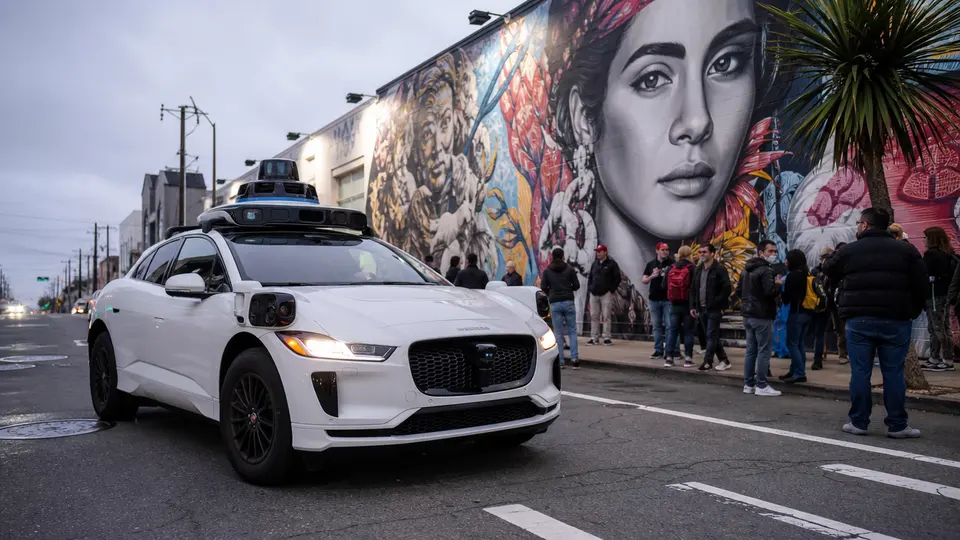
Driverless robotaxis have moved from speculative technology to street-level reality across a growing number of American cities — and the political battles over who governs them, on what terms, and at what pace are intensifying in step with the fleets themselves.
The scale of expansion
Waymo, the market leader, is currently operating more than 3,500 vehicles publicly across 11 US cities and providing more than 500,000 paid rides a week. Zoox, owned by Amazon, has begun charging passengers for rides in Las Vegas and continues to offer free trips through its Explorer programme in San Francisco, with plans to extend that programme to Austin and Miami. Tesla, which began its robotaxi rollout with a safety monitor aboard more than a year ago, appears to be growing its unsupervised fleet ahead of launching its purpose-built Cybercab. For context, Uber handles roughly 40 million trips a day globally, meaning robotaxis remain a small fraction of the overall ridehailing market — but their visibility, particularly when a driverless vehicle stalls during a blackout or obstructs an emergency response, far exceeds their market share.
A patchwork of stalled and contested rules
The regulatory picture is fragmented and, in several key jurisdictions, unresolved. In New York, Governor Kathy Hochul withdrew a proposal earlier this year that would have permitted driverless robotaxi service outside New York City following opposition from taxi drivers, unions, and state lawmakers; commercial driverless service remains illegal in the state. In Washington DC, a City Council hearing on legislation that would legalise commercial robotaxi service stretched to ten hours in July. Lawmakers there are weighing a 200-vehicle cap and a 15-cent-per-mile fee designed to fund Metro upgrades and support workers displaced by automation. In San Francisco, Mayor Daniel Lurie — previously a vocal supporter of robotaxis — is now calling for tougher regulations after Waymo vehicles repeatedly disrupted traffic during emergencies and major events. As of July, California police gained the formal power to cite autonomous-vehicle manufacturers when their driverless cars break traffic laws. Texas, meanwhile, has begun enforcing new permitting requirements for commercial AV operators, while cities in Florida have complained that state preemption laws leave them with limited power to act on problems arising on their own streets. At the federal level, Congress has yet to pass comprehensive robotaxi legislation, though the Trump administration's National Highway Traffic Safety Administration has warned AV companies that vehicles unable to interact safely with police, firefighters, and other first responders pose a danger to the public.
What critics and campaigners are demanding
SAVE-US, a nonprofit pushing for stricter state AV legislation, is working with lawmakers in New York and New Jersey on a three-pronged approach: multi-stage testing and commercial-deployment permits requiring companies to demonstrate safe operation with a small fleet before scaling up; a requirement for multiple sensor types rather than reliance on cameras alone; and restrictions on marketing terms such as "Autopilot" or "Full Self-Driving" for systems that still require human oversight. Shua Sanchez, the group's national campaign director, said the state legislatures "don't have experience with this technology, and there aren't good laws on the books to regulate them." He described SAVE-US as "pro the safe development of technology" rather than opposed to autonomous vehicles outright, and argued that even a strong safety record today does not guarantee equivalent performance after a software or hardware change.
Senator Ed Markey, a Democrat from Massachusetts who has pushed for greater federal oversight, has introduced legislation requiring AV companies to report safety data regularly. "Autonomous vehicle companies are making huge claims about how their technology is going to save lives," Markey said in a statement. "But right now, our regulatory structure amounts to this: we hope they're telling the truth."
For labour groups, the concerns are as much economic as they are about safety. Peter Finn, Teamsters international vice president at large, described autonomous vehicles as an "existential threat" to his members' livelihoods, pointing not only to rideshare drivers but to truckers, delivery drivers, and other commercial workers. The Teamsters have twice pushed California legislation requiring heavy-duty autonomous vehicles such as semitrucks to carry a trained human operator — legislation that Governor Gavin Newsom vetoed on both occasions. Finn said the union intends to pursue the issue again. He also pointed specifically to Zoox's ownership by Amazon, suggesting the underlying technology could eventually be applied to package delivery. Both Zoox and Waymo said their current focus remains their robotaxi services.
Industry acknowledges the need for oversight
Robotaxi companies are not uniformly resisting regulation. Zoox chief executive Aicha Evans said recently that she wanted "to unequivocally say we agree with the administrator and the administration and the regulatory agency. We need to be regulated." Zoox said it seeks to establish lines of communication with local officials and conducts engagement with first responders before entering new markets. Ron Thaniel, the company's senior director of policy and regulatory affairs, said the industry sees "an opportunity at the federal level to more uniformly regulate autonomous vehicles."
Waymo's global head of public policy, Justin Kintz, said the company has long advocated for a national AV safety standard covering minimum testing requirements, vehicle design, and data sharing, with the federal government setting vehicle safety standards, states governing road rules, and cities handling local matters such as curb space and emergency response. Waymo said it broadly supports the Washington DC council's effort to establish a regulatory framework but objects to parts of the current proposal, arguing that a 200-vehicle cap would probably be too restrictive for a city of that size. Kintz said legislation should allow fleets to grow as companies demonstrate safe performance rather than imposing a permanent ceiling. On the 15-cent-per-mile fee, Waymo said it supports the principle of raising revenue for transit and affected workers but raised concerns about cumulative cost, suggesting an annual fee as an alternative. On labour, Kintz acknowledged that autonomous vehicles could eventually displace drivers and said Waymo was "eyes open" about that possibility, pointing to roles such as fleet technicians, mechanics, and remote support workers as offsetting employment. Asked whether autonomous driving would ultimately create more jobs than it eliminated, he said it was "too soon to tell."
The fights ahead
The California Public Utilities Commission this month cleared Waymo to expand driverless passenger service across parts of 18 counties, including Sacramento, San Diego, and wider areas of Los Angeles and the Bay Area — a significant expansion that coincides with, rather than resolves, the political conflict surrounding the industry. Robotaxis currently serve a tiny share of American travellers, and there is as yet limited evidence that they have displaced significant numbers of driving jobs or materially altered urban mobility. Research has also suggested that driverless services could replace some journeys that would otherwise have been made on public transit, potentially undermining rather than complementing ridership — a claim Waymo contests, citing data from San Francisco showing that more than a third of its riders use the service to connect with public transport. What is not in dispute is that the battles now taking shape are fundamentally about the terms on which these fleets are permitted to grow from thousands of vehicles to hundreds of thousands — and what companies, cities, workers, and the public are owed before that happens.