Nine Charged Over Nvidia Server Exports
- Nine people including employees of Nvidia and Super Micro Computer's Taiwan branches have been indicted over the alleged illegal export of 74 high-end AI servers to China using
- Prosecutors in Keelung say defendants were fully aware of strict export compliance rules yet allegedly colluded at multiple levels for personal gain, routing servers via
- A parallel US indictment filed in March against two senior Super Micro managers over similar Nvidia chip exports to China has not been formally linked to the Taiwan case.

Prosecutors in Taiwan have filed charges against nine people, including employees of Nvidia and Super Micro Computer, over the alleged illegal export of high-end AI servers fitted with Nvidia chips to China, in a case that underscores the growing difficulty of enforcing technology export restrictions amid intense geopolitical competition.
The charges
Eight of the defendants, including one employee from Nvidia's Taiwan branch and two from Super Micro Computer's Taiwan subsidiary, have been charged with breach of fiduciary duty and document forgery by the prosecutors' office in Keelung, a north-eastern port city. A ninth defendant faces an additional allegation of embezzling funds from one of the companies involved in the export transactions.
Forged certificates and diverted servers
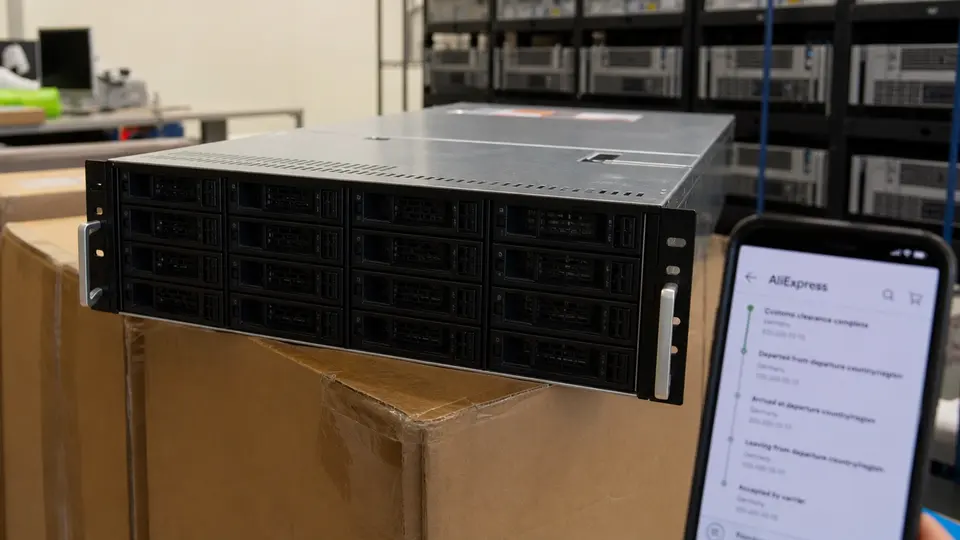
According to the indictment, end-user certificates were falsified to give the impression that 130 B300 servers ordered from Super Micro Computer would be installed and operated at a rented data centre in Taiwan. In practice, prosecutors allege, 74 of those servers were exported to customers in China — routed through direct shipments as well as via transhipment points in Indonesia, Japan, and Hong Kong. A further 56 servers were destined for a company in Japan, but Taiwanese customs officials detected irregularities and halted that consignment before it departed.
The prosecution stated that the defendants were "fully aware" of the strict internal compliance procedures governing exports at both Nvidia and Super Micro, yet allegedly "colluded at various levels for their own enormous benefit", exporting the servers illegally, driving up compliance costs for the companies involved, and causing, in the prosecution's words, "serious damage to our country's international reputation".
Parallel US proceedings
In a separate but potentially related development, two senior Super Micro Computer managers and a further suspect were indicted in the United States in March on charges of illegally selling Nvidia chips to China. According to the US Department of Justice, the accused allegedly ordered servers containing Nvidia GPUs on behalf of a South-East Asian company, had them assembled in the United States, shipped to Taiwan, and then covertly transferred to China. Whether those proceedings are directly connected to the Taiwan indictments has not been established.
Export control context
Taiwan has progressively tightened its export controls in recent years to prevent advanced semiconductor technology from reaching China, a particularly sensitive matter given that Taiwan is the world's leading producer of cutting-edge chips for AI applications. The United States imposed sweeping restrictions on the export of high-speed AI chips — including Nvidia products — to China in October 2022, though manufacturers subsequently adapted their product ranges to circumvent initial limits before the US government closed several loopholes.
The Trump administration granted limited approval for exports of Nvidia's H20 accelerators to China during summer 2025 in exchange for a profit-sharing arrangement with the US government, before later declaring that the most advanced AI chips must remain reserved for American companies on national security grounds. That blanket restriction was subsequently replaced by a case-by-case review process permitting sales of second-tier chips. The Taiwan case illustrates that even within this shifting regulatory landscape, Taiwan remains acutely exposed to the pressures of the US-China technology rivalry, with its own companies and personnel now at the centre of a high-profile enforcement action.