Internet Archive Launches Vintage AI Software Collection
- The Internet Archive has launched the Vintage Artificial Intelligence collection, offering freely accessible emulated software from roughly the 1970s to the 1990s that simulated
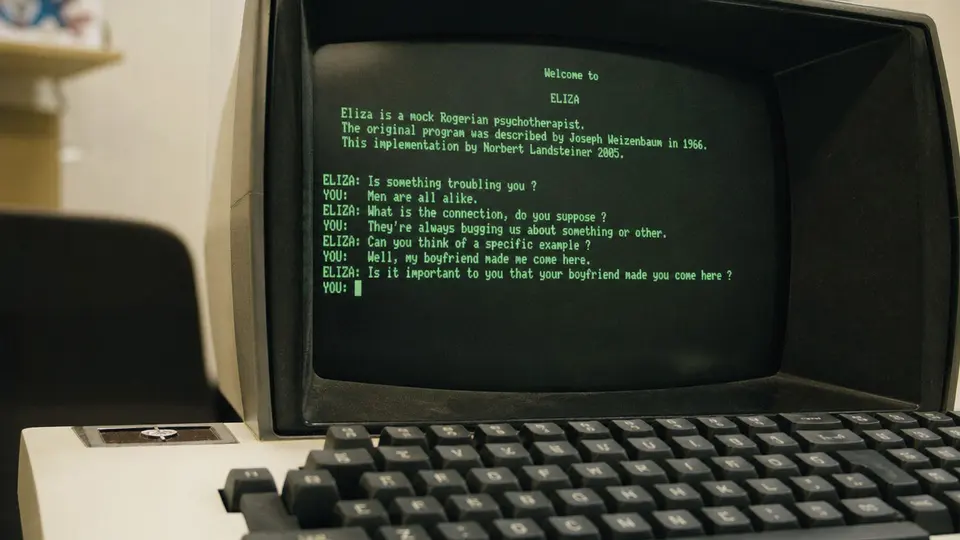
- ELIZA, Joseph Weizenbaum's conversational programme, is the collection's centrepiece, represented by dozens of ports and derivatives across platforms including Apple II, Atari
- Games such as The Hobbit, programmed by Veronika Megler, and Activision's Little Computer People demonstrated early attempts at autonomous character behaviour, approaches the
The Internet Archive has assembled a curated collection of emulated software under the title Vintage Artificial Intelligence, drawing together programmes from roughly the 1970s through the 1990s that explored — or performed — the idea of a thinking machine. The collection is presented for research, education, and public enjoyment, and is freely accessible through the Archive's platform.
The ELIZA lineage
The most prominent exhibit is Joseph Weizenbaum's ELIZA, a programme named after Eliza Doolittle in Pygmalion, whose primary script — DOCTOR — simulated a psychologist with sufficient conviction that users reportedly engaged with it as though speaking to a real clinician. Weizenbaum wrote throughout his life about what he considered the over-abundant assumptions the programme encouraged, yet its success as a conversational illusion was sufficient to prompt dozens of ports and rewrites across Apple II, Atari 800, Radio Shack Color Computer, PalmPilot, and numerous other platforms of the era. The collection holds a substantial range of ELIZA variants, including adaptations in German and a version titled Psycho Eliza, alongside derivative programmes such as DR. SPOC, Hyper Psych, and Abuse — the last of which responds to the user with hostility rather than therapeutic patience.
A separate programme deserving attention is Racter, short for Raconteur, released commercially in 1985. Designed to generate syntactically coherent sentences and short narratives, it produced prose that was eerie in its plausibility, even publishing a small number of short works. Contemporary reviews of Racter, the collection's editorial notes observe, speculated on the implications of such a programme in terms that now read as acutely underestimating the trajectory that modern AI development would eventually follow.
Activision's psychological experiments
Activision — described in the collection's framing as essentially a different company from its present-day incarnation — pursued two notable experiments in AI-adjacent software during the 1980s. Alter Ego, developed by a psychologist, invited players to guide a persona through life stages from childhood to adulthood, with premature death among the possible outcomes. Little Computer People, programmed by David Crane, the developer behind Pitfall!, presented the fiction that small people lived inside home computers, generating hundreds of distinct names and varying behavioural moods to sustain the illusion of autonomous inhabitants.
Autonomous worlds and scripted lives
Several games in the collection leaned heavily on the perception that characters existed independently of the player's gaze. Deadline was reported in general news coverage at the time of its release as an example of literary figures living quietly off-screen. The Hobbit, whose non-player characters were programmed by Veronika Megler, was notable for Megler's commitment to world autonomy: events such as characters fighting and dying could occur entirely outside the player's influence, occasionally rendering the game unwinnable without warning. Suspended split a cryogenically restored consciousness across six robots, each with distinct capabilities — a structure that, the collection's framing suggests, finds echoes in the architecture of contemporary AI agent systems.
Rules, robots, and the limits of intelligence
A further strand of the collection covers autonomous agent programming, including games such as Robot War, Worms, and Fortress, in which players pre-programme the behaviour of automated combatants before releasing them into competition. These programmes, the collection argues, make explicit a principle that is not always acknowledged: that a small number of simple rules, executed rapidly, can generate convincing illusions of intelligence — provided the observer does not look too closely. The collection also extends into expert systems and logic-based programming languages, rounding out a survey of the computational imagination at a moment when the machine's apparent capacity for thought was still treated as genuinely surprising.