US Cancels Korea Drills Over Iran War
- The US has cancelled the Ssangyong amphibious exercise with South Korea, with the South Korean Marine Corps citing Iran war troop shortages as the cause.
- President Trump had previously curtailed the Ulchi Freedom Shield exercise, citing its cost, South Korea's refusal to join the Iran war, and its allegedly hostile signal to North
- South Korean observers have interpreted the cancellations as a possible diplomatic signal to Pyongyang, though North Korea has continued to fire ballistic missiles and condemn
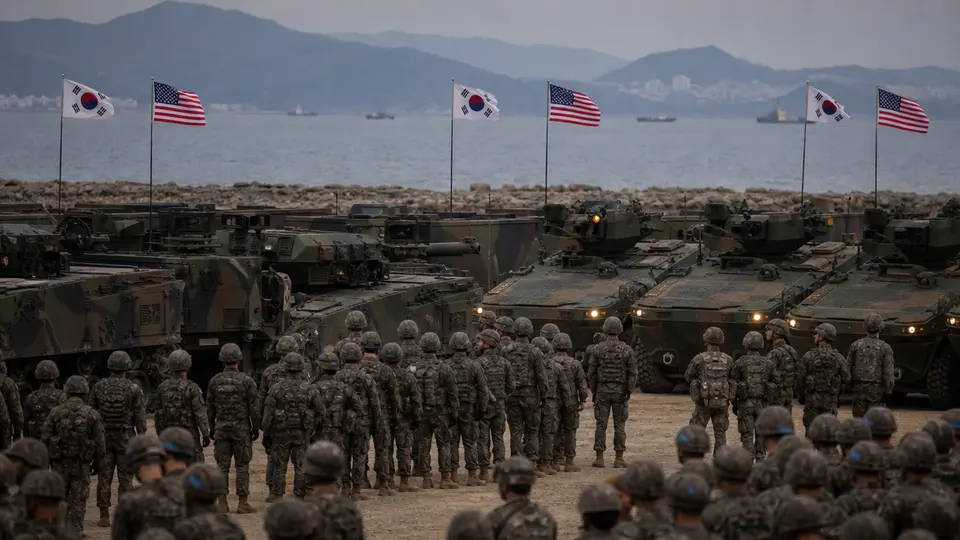
The United States has cancelled a joint military exercise with South Korea scheduled for September, citing a shortage of available troops caused by the ongoing war against Iran. The South Korean Marine Corps confirmed the cancellation of the Ssangyong exercise, which had been due to include amphibious landing drills.
Iran War Stretches US Military Capacity
According to the South Korean Marine Corps, the decision to scrap Ssangyong was driven directly by troop capacity constraints resulting from US military commitments in the Iran conflict. The cancellation follows an earlier decision by President Donald Trump to curtail a separate joint exercise, Ulchi Freedom Shield, before its scheduled conclusion. Trump cited both the financial cost of that exercise and South Korea's refusal to join the Iran campaign as justifications. He also characterised the drills as "hostile" towards North Korea.
A Signal to Pyongyang?
In South Korea, the cumulative effect of both decisions has been interpreted by some as a potential diplomatic signal to Pyongyang. There is speculation that Trump may be seeking to create conditions for a renewed engagement with North Korean leader Kim Jong Un, though this remains unconfirmed. North Korea has not tempered its own conduct in response: it recently fired ten short-range ballistic missiles and once again denounced the joint exercises as preparations for an invasion.
Competing Pressures
The episode illustrates the competing pressures on US military posture in the Indo-Pacific at a time when resources are being directed towards the protracted campaign against Iran. Whether the drill cancellations represent a deliberate diplomatic overture towards Pyongyang or simply a reflection of overstretched forces remains an open question. What is clear is that a significant reduction in US-South Korean military readiness exercises is now under way, with implications for deterrence on the Korean Peninsula that have yet to fully unfold.