Rodrigo Draws on Handmaid's Tale
- Olivia Rodrigo released a new song titled 'Serena Joy' on Monday, named after a character from Margaret Atwood's dystopian novel The Handmaid's Tale.
- In Atwood's fiction, Serena Joy is the wife of Fred Waterford, a leading figure in the oppressive theocratic regime known as Gilead.
- Serena's character is defined by her zealous support for Gilead's conservative and religious values, making her one of the novel's most morally ambiguous figures.
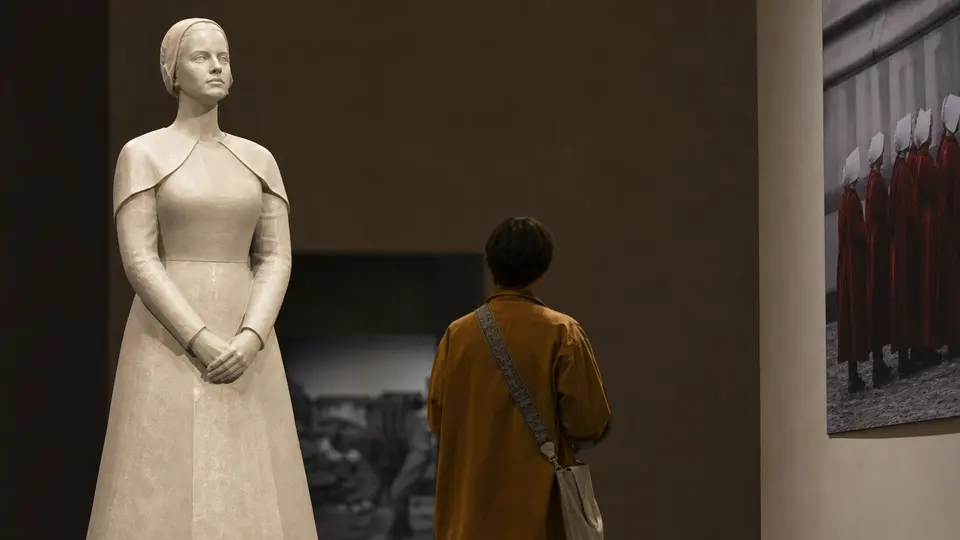
Olivia Rodrigo released a new song titled "Serena Joy" on Monday, drawing inspiration from one of the most morally complex figures in Margaret Atwood's dystopian novel The Handmaid's Tale — a character whose name has long carried charged political and cultural weight.
Who Is Serena Joy?
In Atwood's fiction, Serena Joy is the wife of Fred Waterford, identified in the source material as one of the architects of Gilead — the totalitarian theocracy that supplants the United States in the novel. Far from a passive bystander, Serena is depicted as a fervent adherent to the regime's conservative and religious values, the very principles under which Gilead governs. Her character is defined by a painful paradox: a woman who helped build a system that ultimately subjugates her own freedom.
The Source of Rodrigo's Inspiration
The choice of Serena Joy as a subject signals an engagement with Atwood's broader themes of complicity, ambition, and gendered power. Rodrigo has not been quoted in the available material explaining her precise creative intent, so the thematic interpretation of the song itself remains to be established from the track and any accompanying statements. What is confirmed is that the song shares its name with this figure, and that the connection to Atwood's work is deliberate.
The release adds to growing cultural interest in Atwood's Gilead narrative as a lens through which contemporary political and social anxieties are examined — a phenomenon also visible across other art forms. For those following musicians who engage with literary and political themes, the approach is reminiscent of Maya singer Sara Curruchich's work honouring a disappeared poet, where art is used explicitly as a vehicle for memory and resistance.
The full meaning of Rodrigo's "Serena Joy" — and how faithfully or freely it interprets its source character — will become clearer as listeners and critics engage with the lyrics directly.
More in Culture & Arts
→ Culture & Arts
Why Penthouses Became Status Symbols
Culture & Arts
Why Penthouses Became Status Symbols
 Culture & Arts
Belgian Pie-Thrower Godin Dies at 80
Culture & Arts
Belgian Pie-Thrower Godin Dies at 80
 Culture & Arts
Shetland's Spanish Armada Legend
Culture & Arts
Shetland's Spanish Armada Legend
 Culture & Arts
Turner Prize Winner's Sound Evidence
Culture & Arts
Freddie Mercury Costumes on Show at V&A
Culture & Arts
Kit Harington Joins Harry Potter Series
Culture & Arts
Turner Prize Winner's Sound Evidence
Culture & Arts
Freddie Mercury Costumes on Show at V&A
Culture & Arts
Kit Harington Joins Harry Potter Series
Read in another language