Garífunas Resist Land Loss in Honduras
- Garífuna communities in Honduras's Tela municipality have recovered at least 6.2 hectares of land and are maintaining permanent watch posts to defend their claims.
- OFRANEH, the principal Garífuna rights organisation in Honduras, has formally planted its flag on nine reclaimed plots in the community of San Juan, where housing and a children's
- The extent of the territorial dispute and the identity of those challenging Garífuna land claims remain only partially documented in available accounts.
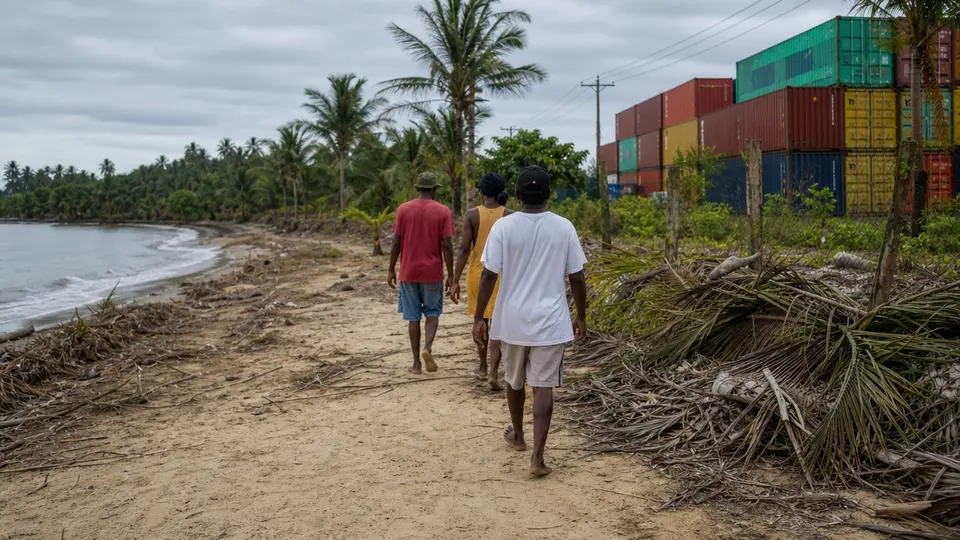
In the Honduran municipality of Tela, members of the Garífuna indigenous community are maintaining round-the-clock watch over parcels of land they say they have reclaimed, erecting makeshift shelters and standing guard against what they describe as an ongoing threat to their territorial existence.
A month on the land
Wilfredo Guerrero has spent the past month living on a vacant plot of land where a recently constructed wooden and corrugated iron shelter serves simultaneously as his home, his watch post, and his site of resistance. When an unfamiliar vehicle enters the ground, he moves silently behind a sheet of metal to observe its passengers without being seen, his hand resting on the pouch at his waist. The vigilance, he suggests, has become routine. "These bastards change cars like changing underwear," he said, laughing, before returning to his meal.
Territorial recovery in San Juan
In the nearby Garífuna community of San Juan, leaders of the Organización Fraternal Negra Hondureña (OFRANEH) have planted their flag at the main entrance of nine plots of land the community says it has recently recovered. The land measures nine manzanas, equivalent to 6.2 hectares. Community members say they plan to use the site to build housing and a park for children.
Leaders from the Tornabé community, also within the Tela municipality, have similarly been traversing recently recovered territories. The presence of OFRANEH — the principal organisation representing Garífuna rights in Honduras — underlines the organised and collective nature of the resistance effort, though the precise legal status of the land claims and the identity of any opposing parties remain unclear from available accounts. Uncertainty persists over what formal or legal mechanisms, if any, are being pursued in parallel to the physical occupation.
A broader pattern of dispossession
The Garífuna, an Afro-indigenous people whose communities are concentrated along the Caribbean coast of Central America, have long faced pressure on their ancestral territories from tourism development, agricultural interests, and other land claims. The communities in Tela represent part of a wider pattern of displacement that indigenous rights organisations have documented across the region. Comparable pressures on indigenous land have been observed elsewhere in the Americas, including controversies over the impact of infrastructure on ancestral indigenous sites. The resistance in Tela, sustained by individual sentinels like Guerrero and backed by the organisational weight of OFRANEH, signals that Garífuna communities intend to hold their ground — though the long-term outcome of these land recoveries remains unresolved.