Ukraine Marks Independence Day Vowing Never to Surrender
- President Zelensky declared on Ukraine's Independence Day that his country will never surrender, hosting foreign leaders including UK Prime Minister Andy Burnham at a ceremony in
- The UK announced it will allow Ukraine to manufacture parts for the Storm Shadow cruise missile domestically, while the EU pledged a further €6.1 billion in financial aid as part
- Ukraine remains largely defenceless against Russian ballistic missiles due to a global shortage of Patriot interceptors, with hopes resting on a potential upgrade to the
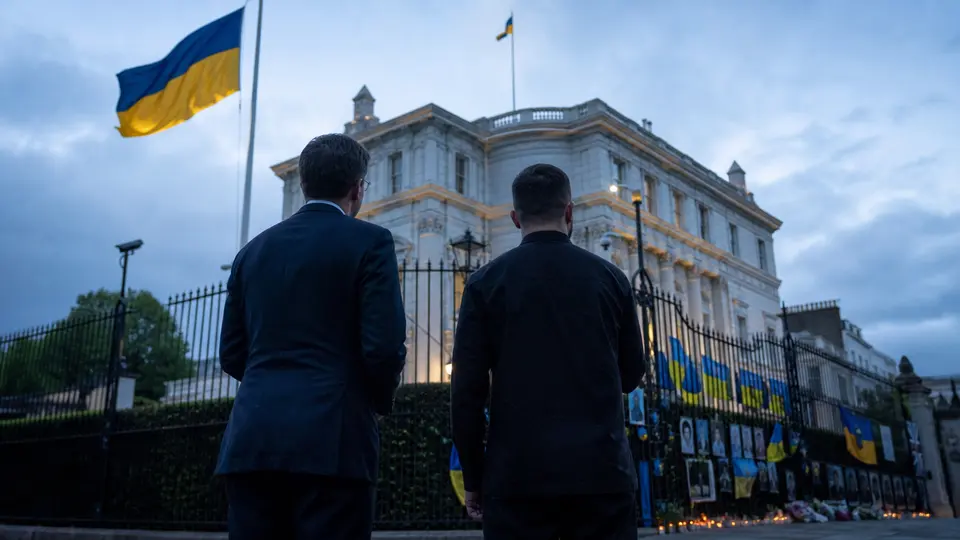
Ukraine marked its Independence Day under wartime conditions on Monday, with President Volodymyr Zelensky vowing before assembled foreign leaders in Kyiv that his country would never capitulate to Russia. The occasion brought fresh pledges of military and financial support from the European Union and the United Kingdom, as Russian strikes continued to strike other parts of the country even as the capital celebrated.
Zelensky's declaration in the shadow of St Sophia's
Zelensky received his foreign guests in the square before St Sophia's Cathedral in central Kyiv, where he also honoured soldiers and civilian volunteers — some of them posthumously. Addressing the gathering, he framed Ukraine's independence as inseparable from its current struggle. "This is the dream of shaping one's own life, of ensuring that our children are not the asphalt beneath someone's boots, beneath someone's tanks, beneath someone's empire," he said. "Today we can declare a fact here, proved by the strength and steadfastness of our people in this war. Ukrainians will not submit." The message was unambiguous: surrender is not an option.
Large public gatherings were deliberately avoided given the persistent threat of air strikes. The centrepiece event in Kyiv was a gala concert at the opera house in the early evening. Across the country, smaller occasions took place — craft markets, concerts, and marathon races — though many Ukrainians were required to work, public holidays having been suspended for the duration of the war.
Burnham chairs Coalition of the Willing from Kyiv
The visit marked the first overseas trip by British Prime Minister Andy Burnham since taking office. From Kyiv, he chaired a session of the so-called Coalition of the Willing — the grouping of supportive nations — alongside German Chancellor Friedrich Merz and French President Emmanuel Macron. Before the meeting, Burnham praised Ukraine for defending not only itself but, in his words, the whole of Europe. "I am determined that we work together to deliver the support they need," he said, adding that this meant more than air defence: it required "preventing Russia from launching its missiles in the first place — with sanctions that sever its military supply chains."
One concrete announcement from the Coalition session was the UK's decision to permit Ukraine to manufacture components for the Franco-British Storm Shadow cruise missile on its own soil, a move Burnham disclosed during the video conference. Zelensky said the meeting focused primarily on air defence.
Air defence gap and the ballistic missile threat
The backdrop to those discussions is a stark vulnerability. Ukraine is currently largely without effective protection against Russian ballistic missiles; the US-made Patriot system is the only one demonstrated to intercept them, but Ukraine is unable to procure sufficient interceptor missiles due to acute global scarcity. Ukraine is placing hopes in a potential upgrade to the Franco-Italian SAMP/T air defence system, which may — through an improved radar unit — eventually be capable of engaging ballistic missiles, though this remains unconfirmed. In parallel, Ukraine is already attempting to destroy Russian ballistic missile launchers using cruise missiles and drones.
EU aid and continued Russian strikes
The EU separately announced on Monday a further €6.1 billion in financial assistance for Ukraine, drawn from a broader €90 billion package the country is set to receive from EU member states over this year and next. Kyiv itself was free of air raid alarms during the celebrations. However, Russia carried out attacks on other regions of the country on the same day: in Pavlohrad, in the Dnipropetrovsk region, one person was killed and two others injured, according to local authorities.
The combination of Zelensky's defiant rhetoric, new allied commitments, and simultaneous Russian strikes elsewhere underscored the paradox at the heart of Ukraine's 34th Independence Day — a country celebrating sovereignty while fighting for its existence. Warnings over Russian mobilisation have added further urgency to allied support discussions in recent weeks.