Germany's Cabinet Retreat Tests Coalition Unity
- Germany's black-red coalition is holding a cabinet retreat at Schloss Neuhardenberg in Brandenburg, with the government seeking to demonstrate its ability to act.
- The coalition faces poor polling numbers and reported internal dissent from within its own ranks ahead of the sessions.
- Whether the retreat will constitute a meaningful political reset for the CDU/CSU-SPD government remains uncertain.
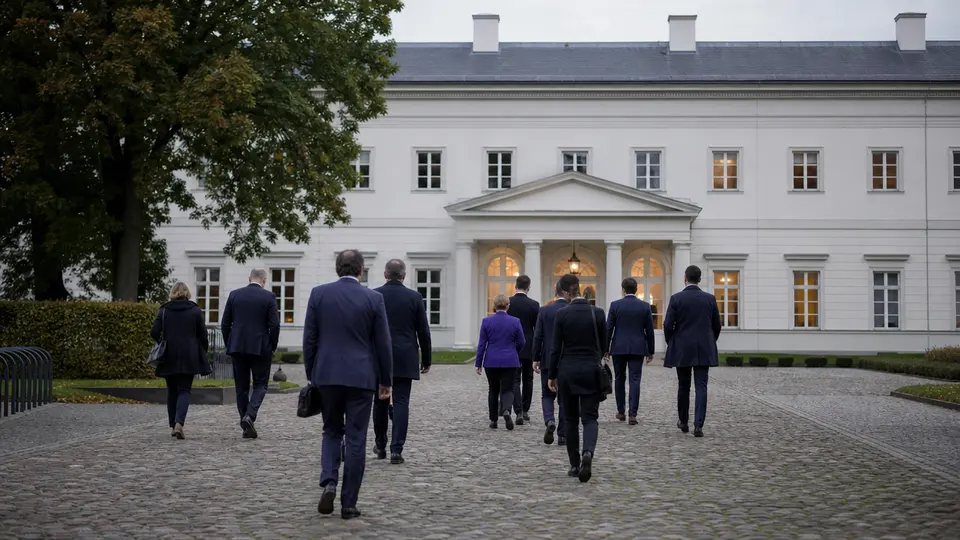
Germany's ruling black-red coalition has convened for a formal cabinet retreat at Schloss Neuhardenberg in Brandenburg, with expectations running high that the government will use the gathering to demonstrate its capacity to govern. The Kabinettsklausur — a structured parliamentary recess session — arrives at a moment of considerable internal strain, with poor polling figures and reported headwinds from within the coalition's own ranks casting a shadow over proceedings.
Pressure to Prove Governing Capacity
The CDU/CSU and SPD coalition has framed the retreat as an opportunity to signal political momentum and cohesion to a sceptical public. Whether it will succeed in that aim remains uncertain. The mood ahead of the sessions is described as burdened — a notably candid acknowledgement given the government's ambitions for the occasion.
Internal Discontent and Polling Difficulties
Beyond the poor opinion poll ratings that have dogged the coalition, dissent from within its own parliamentary groupings adds a further complication. The source material does not detail the precise nature of that internal opposition, leaving the full picture unresolved. The question of whether Neuhardenberg can serve as a genuine reset point for the government — or whether it will be overtaken by the pressures already visible — remains open. As Chancellor Merz has sought to use the Brandenburg retreat to advance a reform agenda, the cabinet klausur represents a critical test of whether that ambition can be translated into visible political action.
More in Politics
→


Read in another language