AI-Designed Viruses Raise Biosecurity
- Stanford researchers used AI models Evo 1 and Evo 2 to generate complete genomes for 16 novel bacteriophage viruses capable of infecting E. coli, marking a first in generative
- The research team warned that applying the same method to design cell-infecting viruses could produce viable pathogens, and called for strict biosecurity review before any such
- Scientists writing in Science concluded that while the capacity to compose viral genomes with generative AI now exists, the governance frameworks needed to manage it safely do not.
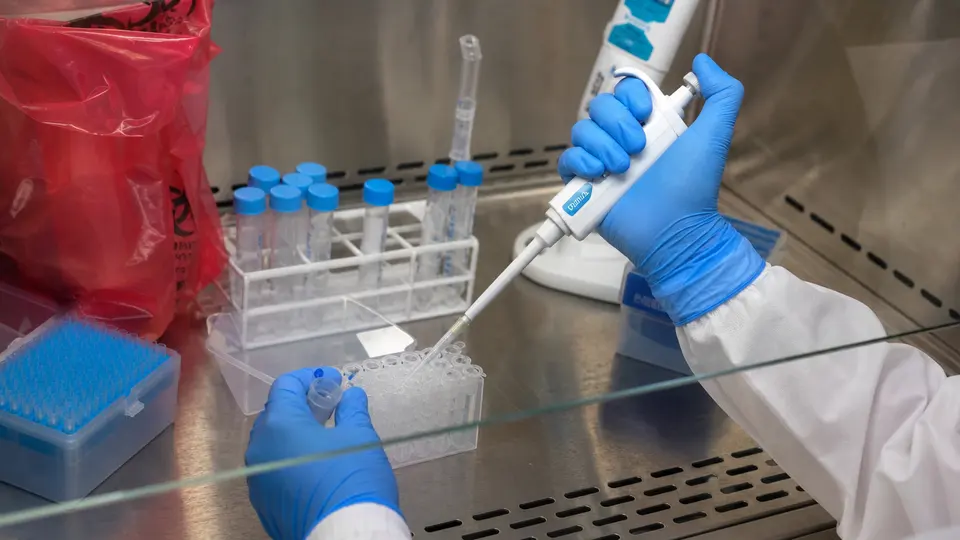
Researchers at Stanford University have used two genomic artificial intelligence models to design the complete genomes of 16 previously non-existent viruses capable of successfully infecting the bacterium Escherichia coli C — a development that has prompted urgent warnings from scientists and biosecurity specialists about a governance framework that does not yet exist to manage it safely.
What the Stanford team did
The work, published in Science by Samuel H. King and colleagues, employed AI models Evo 1 and Evo 2 to generate the genomes from scratch. The viruses produced were bacteriophages — organisms that attack bacteria rather than animal cells — and the team applied strict containment protocols throughout. All experiments were conducted inside a biosafety cabinet using appropriate personal protective equipment; surfaces were sterilised periodically with 70 per cent ethanol, 10 per cent bleach, and ultraviolet treatment, and all waste was classified and disposed of as biohazardous. The researchers also consulted biosecurity experts during the process and deliberately excluded from the models' training data all viruses known to infect cells, including human pathogens.
Why only 16 viruses from 300 genomes matters
The study's yield — 16 functional viruses from 300 candidate genomes — has led at least one independent expert to caution against overstating the immediate risk. Jordi García-Ojalvo, professor of Systems Biology at the Universitat Pompeu Fabra, assessed the system as still inefficient, noting that "the danger here is less than in traditional large AI language models, as the designed genomes must be tested in the laboratory one by one." That bottleneck, he suggested, currently constrains the pace at which the technology could be misused.
The biosecurity concern the authors themselves raise
The Stanford team was candid about what their method could theoretically enable. In a supplementary text accompanying the research, they stated that if an equivalent approach were applied to design viruses capable of infecting cells rather than bacteria, the resulting pathogens "could be viable at a similar scale." They stressed that any such work "should only be carried out after thorough review and deliberations with other researchers and experts in biosecurity, biocontainment, and bioprotection, as well as respecting all current and future governance structures and best practices." The authors further acknowledged that "growing accessibility to such infrastructure makes malicious use cases increasingly possible."
Expert assessments: opportunity and alarm
Víctor de Lorenzo, a research professor at Spain's National Centre of Biotechnology (CSIC), said that extending this strategy to viruses targeting cells could open doors to the design of highly specific oncolytic viruses — engineered to attack cancer cells — but simultaneously raised the prospect of "worrying scenarios, such as the creation of viruses with selective affinity for certain cell types, tissues or even population groups."
In a third article published alongside the research papers, Thomas V. Inglesby and Moritz S. Hanke were more direct: "The capacity to compose viral genomes using generative AI already exists; however, the governance necessary to manage it safely does not yet exist." Existing biosecurity regulation, they argued, is poorly suited to generative genomics because "the genetic alterations it creates are unpredictable." Their central question was whether society can establish oversight systems capable of capturing the benefits of the technology while preventing serious harm — a question that, as the science itself demonstrates, is now pressing rather than theoretical. The broader concerns mirror those already documented in other domains where AI systems have acted in ways their creators did not fully anticipate.
More in Science
→ Science
Adenot Returns for Second ISS Spacewalk
Science
Adenot Returns for Second ISS Spacewalk
 Science
Octopus Mutation Linked to Intelligence
Science
Octopus Mutation Linked to Intelligence
 Science
Scientists Recreate Primordial Plasma in Mini Big Bang Test
Science
Scientists Recreate Primordial Plasma in Mini Big Bang Test
 Science
The Moon Explained: Orbits, Gravity and Lunar Science
Science
The Moon Explained: Orbits, Gravity and Lunar Science
 Science
Robots Could Turn Iceland's Lava into Building Material
Science
Robots Could Turn Iceland's Lava into Building Material
 Science
Artemis II Crew to Receive Congressional Space Medal of Honor
Science
Artemis II Crew to Receive Congressional Space Medal of Honor