Volkswagen Crisis: Expert Warns Savings Plan Falls Short
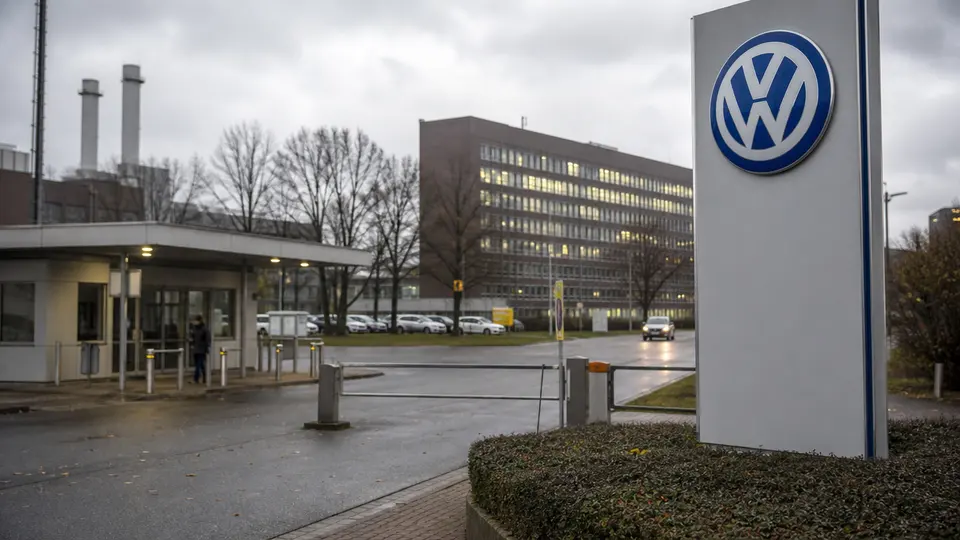
Automotive expert Helena Wisbert warns Volkswagen's cost-cutting programme does not go far enough, as CEO Oliver Blume acknowledges the company cannot earn enough to finance its future. A supervisory board meeting on Friday is expected to yield a revised savings plan, though site-specific resolutions remain unlikely.
Written by Sarah Mitchell
(2h ago)
Developing
What happened?
Volkswagen CEO Oliver Blume told works council meetings that the situation is "more than critical" and that existing cost savings of 20 per cent and planned cuts of 50,000 jobs by 2030 are insufficient.
Why it matters
Four VW sites — Emden, Zwickau, Audi's Neckarsulm plant, and Hannover — face potential closure, with tens of thousands of additional jobs at risk beyond those already announced.
What’s next?
A supervisory board meeting planned for Friday, 4 September, is expected to see a revised savings plan presented, though expert Helena Wisbert does not anticipate site-specific resolutions at that stage.
Volkswagen must act swiftly to overcome its current crisis, according to Helena Wisbert, a professor of automotive economics at Ostfalia Hochschule Wolfsburg. "The savings programmes we are now seeing at all carmakers are unavoidable," Wisbert said, arguing that the measures must be implemented rapidly so that the group can refocus on developing new models and technologies. Having made considerable efforts to restore competitiveness in the Chinese market, she warned, Volkswagen must not lose sight of the European market in the process.
Market share eroding in electric vehicles
German carmakers continue to dominate competition in Europe, Wisbert acknowledged, but she cautioned that their share of the electric vehicle segment is shrinking even there. Workers' council criticism and political objections are understandable, she said, yet an agreement on further cost savings must be reached within the coming months. Time is pressing. In recent days, extraordinary works council meetings were held at numerous Volkswagen sites, at which employees demanded answers about the announced intensification of cost-cutting. Concerns centre on tens of thousands of additional job losses and the potential closure of four entire sites: Emden, Zwickau, the Audi plant in Neckarsulm, and Hannover, where commercial vehicles are manufactured.
Fifty thousand job cuts by 2030 deemed insufficient
Volkswagen's leadership has stated that the ongoing programme of redundancies — 50,000 positions to go by 2030 — and the cost reductions already achieved at its factories are, in its view, not enough. Management under group chief executive Oliver Blume is therefore working on a new "Zielbild 2030", a revised target framework for the decade. "The situation is more than critical," Blume said at the opening of the works council meetings. The company is profitable, he added, but does not earn enough to finance its future. Wisbert judged it important that the board had appeared in person, given that information had previously reached employees only through third parties. "For the workforce at the plants under threat, it must have been sobering to hear that the 20 per cent in cost savings achieved so far are not sufficient," she said. A further uncertain period of six to twelve months now follows, she added, during which solutions will be sought.
Board communication described as "difficult"
Wisbert viewed the board's personal appearances positively, but took a more sceptical view of the language used. Telling a workforce anxious about jobs that "everyone must pull together" and that this is a "shared effort" is, she argued, a difficult message to deliver in the circumstances. "Those are words more suited to preparing management to accept cuts to their bonuses," she said. At the supervisory board meeting reported to be scheduled for Friday, 4 September, Wisbert expects the board to present a revised savings plan, with the supervisory body likely to approve certain individual measures. She does not, however, anticipate concrete resolutions for specific plants, given the newly announced six-to-twelve-month timeline for negotiations.
Topics
People
Organizations
Source: Heise
Read in another language