Tip Creep: How US Tipping Culture Is Reshaping UK Habits
- Service charge prompts are now commonplace at British pubs, coffee shops, and self-service machines, not just restaurants, in a phenomenon described as 'tip creep'.
- In some upmarket London restaurants a 15% service charge is standard, and tips are increasingly requested before any service is delivered.
- Who ultimately profits from collected service charges — staff or employers — remains contested and largely opaque to consumers.
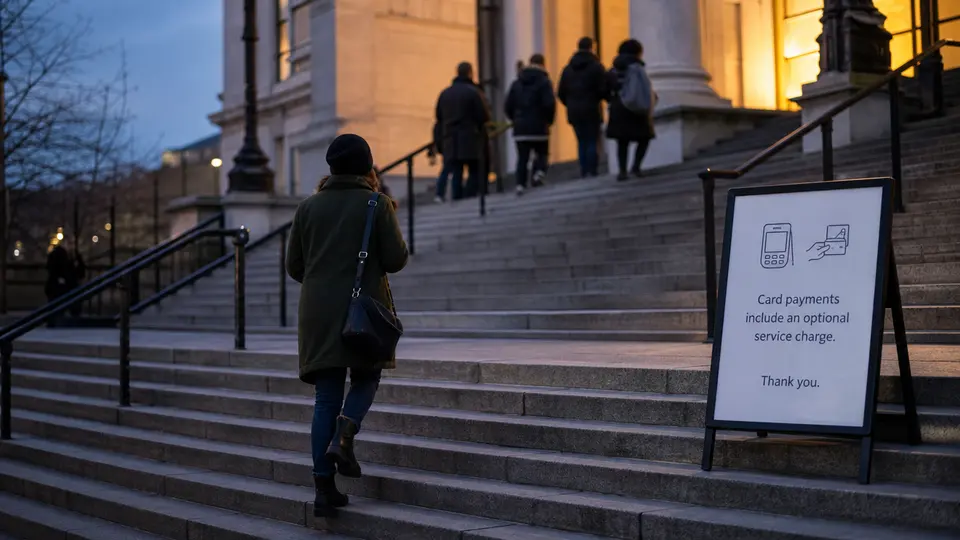
Tipping in Britain is no longer confined to the restaurant table. Service charge prompts are appearing with growing frequency at pub bars, coffee shop counters, and even self-service kiosks — a creeping shift that is unsettling consumers and sharpening questions about who ultimately benefits from the extra money collected.
A pint, and then some
The frustration has a very human face. Greg Double, a consumer in London, described a recent pub visit as an uncomfortable collision with the new reality. "I was annoyed about the pint being eight quid, but then when you put service on top, it's absolutely criminal," he said. His reaction captures a broader tension: at what point does a customary gratuity shade into an expected surcharge that consumers feel unable to refuse?
From restaurants to coffee shops
For decades, the informal British convention was a 10% tip at sit-down restaurants, alongside enduring uncertainty about whether to tip hairdressers, babysitters, or food-delivery riders. That already-awkward landscape has since grown considerably more complicated. In some of London's smarter restaurants, a 15% service charge is now relatively standard. More strikingly, tip prompts are increasingly presented in coffee shops at the point of payment — before any service has been delivered at all.
An American import
The trend is widely attributed to the influence of American tipping norms, where gratuities are deeply embedded in the economics of low-wage service work. In Britain, where the cultural and legal context differs considerably, the US-style approach sits uneasily with many consumers. The question of who genuinely profits from service charges — employers, front-of-house staff, or some combination — is raised but, in many cases, remains opaque and unresolved.
As pressure on British household budgets intensifies — with inflation forecast to rise further on the back of surging energy bills — the expectation to tip on top of already elevated prices is likely to make the debate still more charged.
More in Society
→




Read in another language