Politics Analysis
Germany Names Russia as Hybrid Attack Orchestrator and Closes Consulates
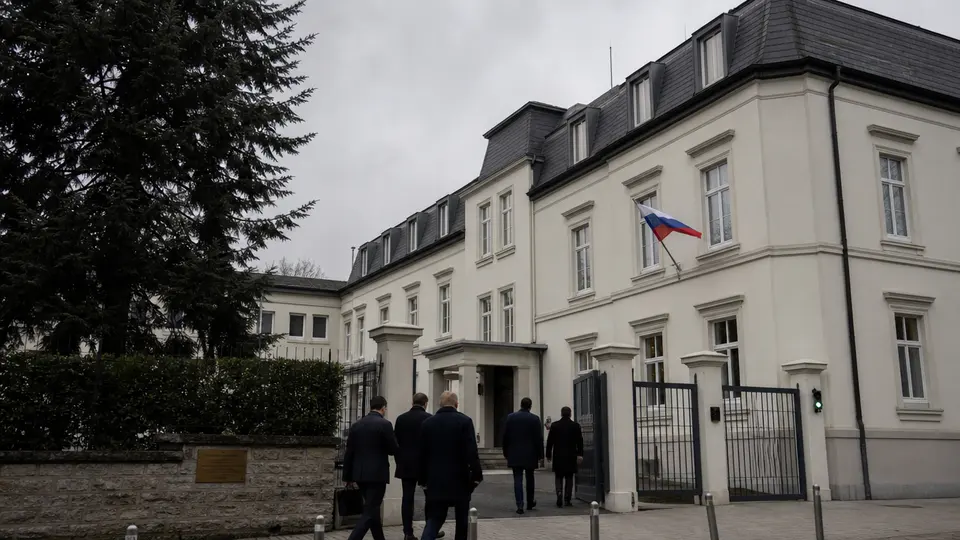
Germany has formally identified Russia as the orchestrator of a series of hybrid attacks and announced the closure of the last Russian General Consulate in Bonn and the Russian House in Berlin, both regarded as hubs for Russian espionage activity.
Written by David Chen
(9h ago)
What happened?
Germany has officially named Russia as the orchestrator of hybrid attacks and announced the closure of the last Russian General Consulate in Bonn and the Russian House in Berlin.
Why it matters
Both facilities are regarded as centres for Russian espionage, and their closure is expected to significantly disrupt the activities of Russian intelligence operatives in Germany.
The German government has taken the formal step of naming Russia as the mastermind behind recent hybrid attack attempts, while deliberately calibrating its response to avoid provocation — a balance that commentator Markus Sambale, writing for Tagesschau, describes as a studied exercise in democratic restraint.
Chancellor Friedrich Merz had issued a pointed warning the previous week — "Sie werden dafür bezahlen" ("They will pay for it") — yet he did not appear before cameras to announce Germany's formal response. Instead, it fell to the Interior Minister and the Foreign Minister to present the government's conclusions and countermeasures. Sambale argues this was a deliberate choice: a direct "Merz versus Putin" confrontation would, in his assessment, serve Russian interests rather than German ones.
Diplomatic and intelligence consequences
Among the measures announced, the closure of the last Russian General Consulate in Bonn and the Russian House in Berlin stands out. Sambale characterises these not as symbolic gestures but as substantive blows to Russian intelligence operations, on the grounds that both facilities are widely considered to function as espionage centres. The German government has also cited a failed drone attack in Leipzig — an incident in which casualties were apparently considered acceptable by those who ordered it — as part of a pattern of Russian-directed hybrid aggression across Europe.
Unanswered questions over the shadow fleet
Not all of the announced measures have drawn equal confidence. The government's pledge to increase pressure on Russia's shadow fleet has been met with scepticism in the commentary. Numerous tankers, sailing under foreign flags and carrying Russian oil, continue to transit the Baltic Sea in apparent breach of existing sanctions. The mechanism by which Germany intends to tighten enforcement has not been specified, leaving the commitment, as Sambale puts it, sounding tentative.
Interior Minister Alexander Dobrindt has described Germany as a "daily target of hybrid warfare", a formulation that underscores the persistence and breadth of the threat. Yet Sambale draws particular attention to a second remark by Dobrindt, one that carries its own strategic logic: "We are not at war." The distinction matters both legally and politically, and the government appears to have chosen its language with that in mind. Whether the measures so far adopted will be sufficient to alter Russian conduct remains, by the commentary's own assessment, an open question.
Topics
People
Source: Tagesschau