When to Clean Your Garden Water Butt
- Garden water butts should be inspected at least once a year and cleaned as needed, ideally in spring or after the growing season.
- Warning signs requiring immediate attention include sludge deposits, foul odours, cloudy water, visible algae, and malfunctioning filters or inlets.
- Entering a large underground cistern poses risks of oxygen deficiency and toxic gases, meaning such work should always be carried out by professionals.
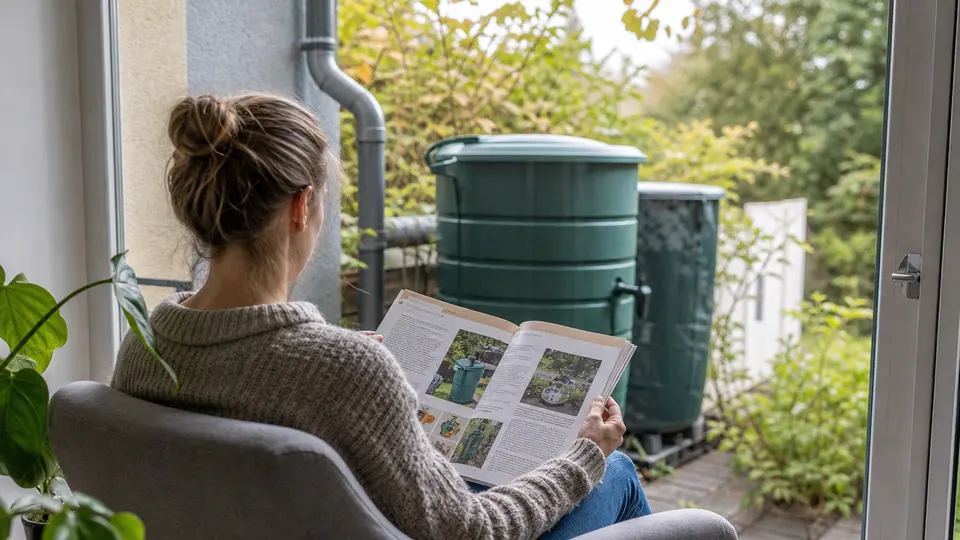
Rainwater butts and underground cisterns save households significant volumes of mains water and often suit garden plants better than tap water — but without regular attention, both can become breeding grounds for algae, bacteria, and sediment that compromise water quality.
No fixed schedule, but at least once a year
There is no single prescribed cleaning timetable that applies to every setup. Torsten Brämer, an expert with the online gardening community Wir sind Garten, advises that a standard water butt should be inspected at least once annually and cleaned where necessary, with spring or the end of the growing season cited as the most practical moments. Well-designed underground cisterns fitted with effective filters, however, can often go several years between full cleans, with routine filter and inlet maintenance taking priority over wholesale emptying.
Warning signs that demand attention
The clearest indicator that a clean is overdue is a direct look inside the vessel. Key warning signs include a visible sludge layer on the floor, an unpleasant or musty odour, cloudy or discoloured water, visible algae growth, large quantities of suspended particles, and inlets or filters that are no longer functioning correctly. Any one of these should prompt action rather than a wait for the next seasonal check.
How contamination builds up
Rainwater reaching a barrel or cistern via a roof carries with it leaves, pollen, dust, bird droppings, and fine mineral sediments. Much of this material settles on the floor and gradually forms a sludge layer. In modest quantities the accumulation is largely harmless, but heavier deposits can degrade water quality and encourage the proliferation of microorganisms, including environmental bacteria, fungi, and — via bird droppings — E. coli strains. For garden irrigation purposes this is seldom a practical concern, but it underlines why rainwater must never be treated as drinking water. Unlike mains supply, it contains no chlorine and is typically softer, which makes it well suited to watering plants but unsuitable for human consumption.
Maintenance over cleaning
Above-ground water butts warm rapidly during summer, making them notably more susceptible to algae than their underground counterparts, which benefit from stable, cooler temperatures. For cisterns, the emphasis should therefore fall on maintaining filters, inlet covers, and overflow systems rather than full internal scrubbing. Leaf guards, filters, and opaque, light-proof lids are straightforward preventative measures that meaningfully slow algae growth and reduce the frequency of deep cleans. Householders should be aware that entering a large cistern carries genuine risks — oxygen depletion and accumulation of dangerous gases are documented hazards — and such work should be left to qualified professionals. For those managing their gardens through dry spells, advice on protecting outdoor spaces during a heatwave may also be relevant.
The overriding principle is straightforward: regular inspection matters more than rigid scheduling. A barrel that looks and smells clean may well need nothing more than a filter rinse, whereas one showing visible algae or sediment demands prompt attention regardless of when it was last serviced.
More in Lifestyle
→ Lifestyle
John Lewis Uni List Raises Eyebrows
Lifestyle
John Lewis Uni List Raises Eyebrows
 Lifestyle
Why the First Monday Back Beats New Year for Fresh Starts
Lifestyle
Why the First Monday Back Beats New Year for Fresh Starts
 Lifestyle
How to Make Post-Holiday Recovery Last Longer
Lifestyle
How to Make Post-Holiday Recovery Last Longer
 Lifestyle
How to Make Perfect Zaru Soba: Japan's Cold Summer Noodle
Lifestyle
How to Make Perfect Zaru Soba: Japan's Cold Summer Noodle
 Lifestyle
Fashion Brands Scale Back Plus Sizes in the GLP-1 Era
Lifestyle
The Pet Piano That Taught a Cat to Play for Treats
Lifestyle
Fashion Brands Scale Back Plus Sizes in the GLP-1 Era
Lifestyle
The Pet Piano That Taught a Cat to Play for Treats